Tag Archives: E-Cigarette

Electronic Cigarette Private Mold Design: A Guide to Managing Costs, Scheduling Timelines & Avoiding Key Risks

In the highly competitive electronic cigarette (e-cig) market, private mold design has become a critical strategy for brands to differentiate products, enhance user experience, and build brand loyalty. However, private mold development is often accompanied by challenges such as soaring costs, delayed timelines, and unforeseen risks. This guide breaks down actionable strategies to manage costs, optimize timelines, and mitigate key risks, helping e-cig brands navigate the private mold design process successfully.

Cost Management: Balance Quality and Affordability

Cost overruns are one of the most common pitfalls in e-cig private mold design. To avoid this, brands must adopt a proactive cost-control approach from the initial design phase—starting with material selection and mold structure optimization.

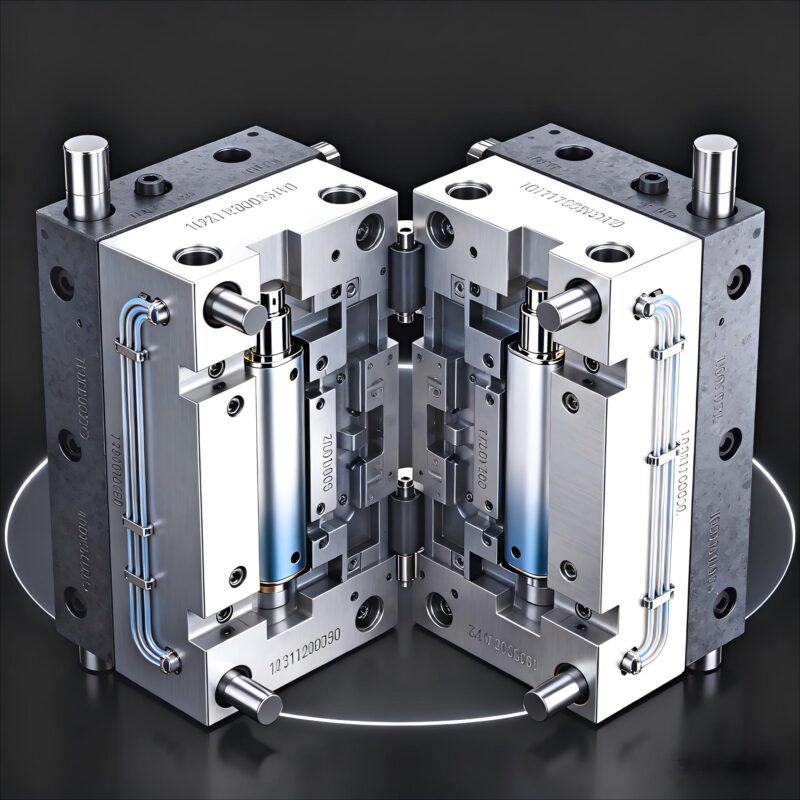
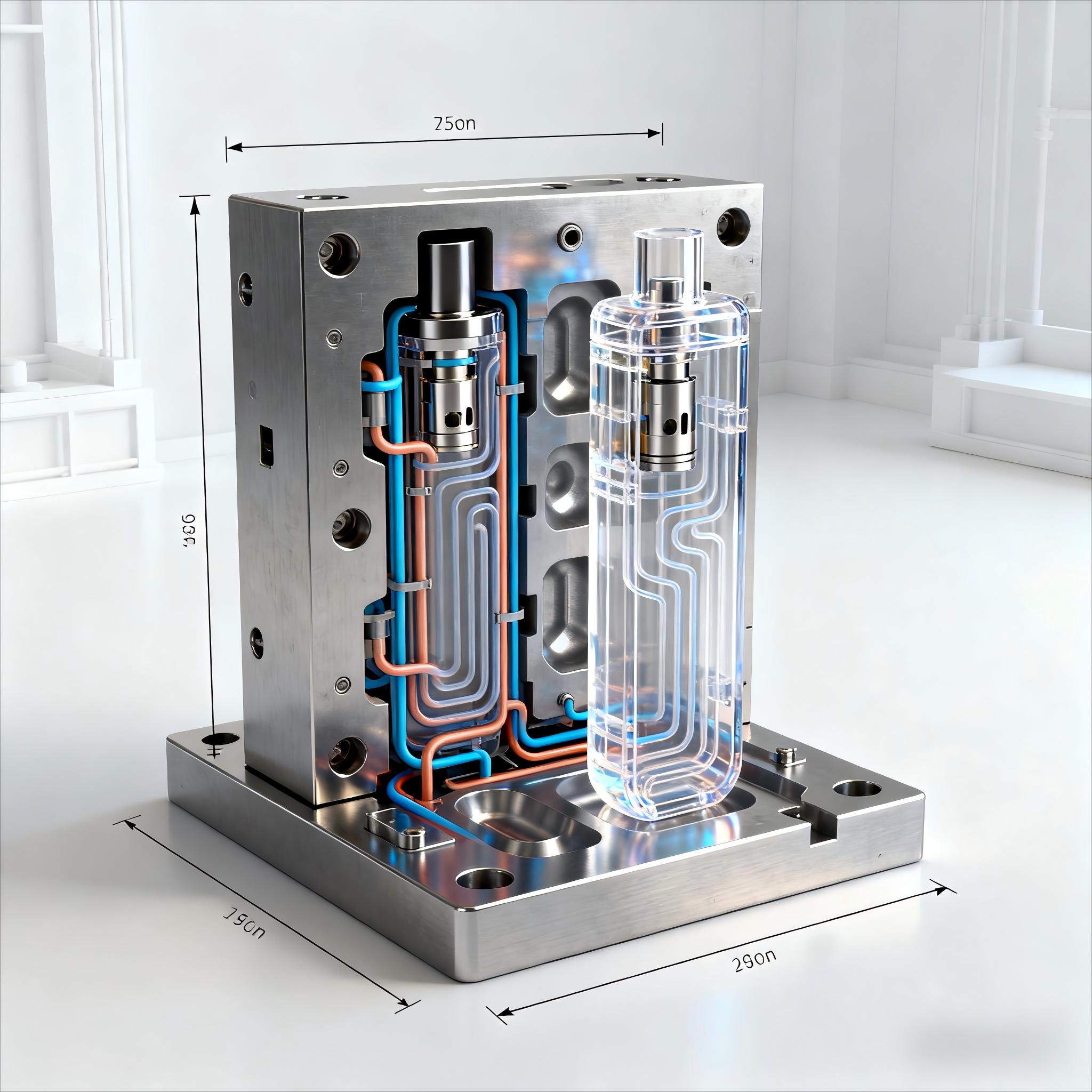
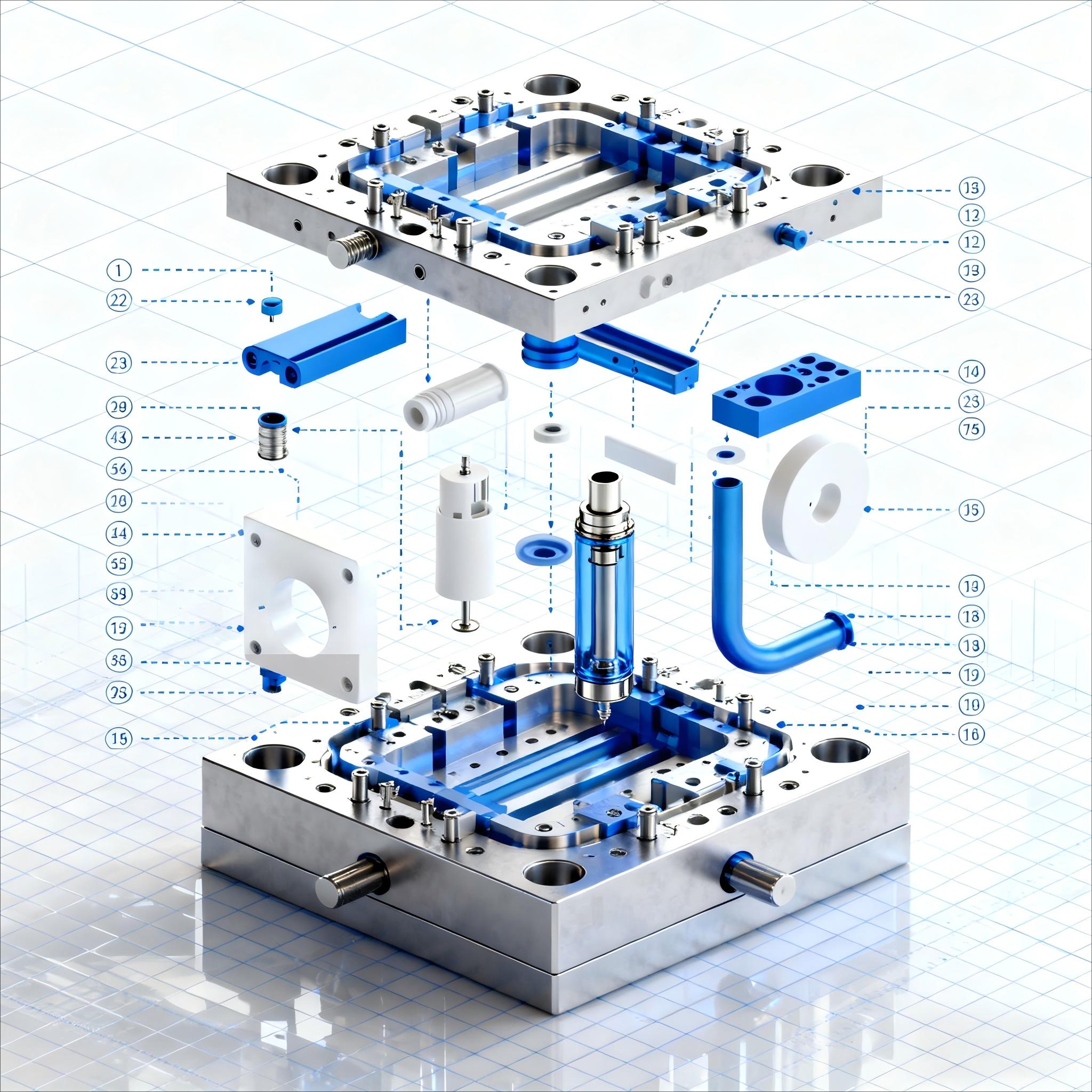
E-cig Private Mold Materials and Components

Figure 1: Common materials for e-cig private molds (left: FDA-approved ABS blends; right: mold steel components)

1.1 Material Selection: Prioritize Cost-Efficiency Without Compromising Compliance

E-cig molds require materials that meet food-grade and heat-resistant standards (e.g., FDA-approved plastics for mouthpieces). While high-end materials like medical-grade PC (polycarbonate) offer durability, they can increase mold costs by 15-20%. Instead, brands can opt for cost-effective alternatives such as ABS (acrylonitrile butadiene styrene) blends, which meet safety standards and reduce material costs by 8-12%. Additionally, working with suppliers to bulk-purchase raw materials can lower per-unit costs by 5-7%.

1.2 Mold Complexity: Optimize Design for Production Efficiency

Overly complex designs (e.g., intricate airflow channels, custom-shaped casings) increase mold manufacturing time and cost. For example, a mold with 4 cavities (for mass production) costs 30% more than a 2-cavity mold, but boosts production efficiency by 60%. Brands should balance design uniqueness with manufacturability: simplify non-critical features (e.g., minor surface patterns) and use standard mold components (e.g., prefabricated guide pins) to cut mold costs by 10-15%.

1.3 Supplier Negotiation: Build Long-Term Partnerships

Choosing the right mold supplier is pivotal for cost control. Avoid selecting suppliers solely based on low quotes—cheap molds may have poor precision, leading to costly reworks. Instead, partner with suppliers with e-cig industry experience and negotiate flexible terms: for instance, a 5% discount for long-term contracts (e.g., 2+ years) or shared tooling costs for future mold modifications. This approach can reduce overall mold costs by 8-10%.

2. Scheduling Timelines: Streamline the Development Process

Delayed mold delivery can cause missed market windows, especially in the fast-paced e-cig industry. A typical e-cig private mold project takes 8-12 weeks, but efficient timeline management can shorten this to 6-9 weeks—with clear phase division being the key.

E-cig Private Mold Development Timeline

Figure 2: Optimized timeline for e-cig private mold development (including 1-week buffer for contingencies)

2.1 Phase-by-Phase Timeline Planning

Break the project into clear phases with deadlines:

  • Design Confirmation (2-3 weeks): Finalize 3D models (using CAD software) and conduct prototype testing (e.g., airflow performance, ergonomics). Involve engineers and marketing teams early to avoid last-minute design changes.
  • Mold Manufacturing (4-6 weeks): Monitor supplier progress weekly—key steps include CNC machining (3-4 weeks) and mold testing (1-2 weeks). Use project management tools (e.g., Asana, Trello) to track milestones.
  • Mass Production Preparation (1-2 weeks): Test mold output (e.g., check for burrs, dimensional accuracy) and debug production lines. Align with assembly teams to ensure seamless transition to mass production.

2.2 Buffer Time for Contingencies

Reserve 10-15% of the total timeline for unexpected issues (e.g., design reworks, material shortages). For example, if the mold testing phase fails due to airflow leaks, a 1-week buffer allows for adjustments without delaying the entire project. Without buffer time, 60% of e-cig mold projects experience delays of 2+ weeks.

3. Avoiding Key Risks: Proactive Mitigation Strategies

E-cig private mold design faces unique risks, from regulatory non-compliance to technical failures. Proactive risk management is essential to protect investments.

3.1 Regulatory Risks: Align with Market Standards

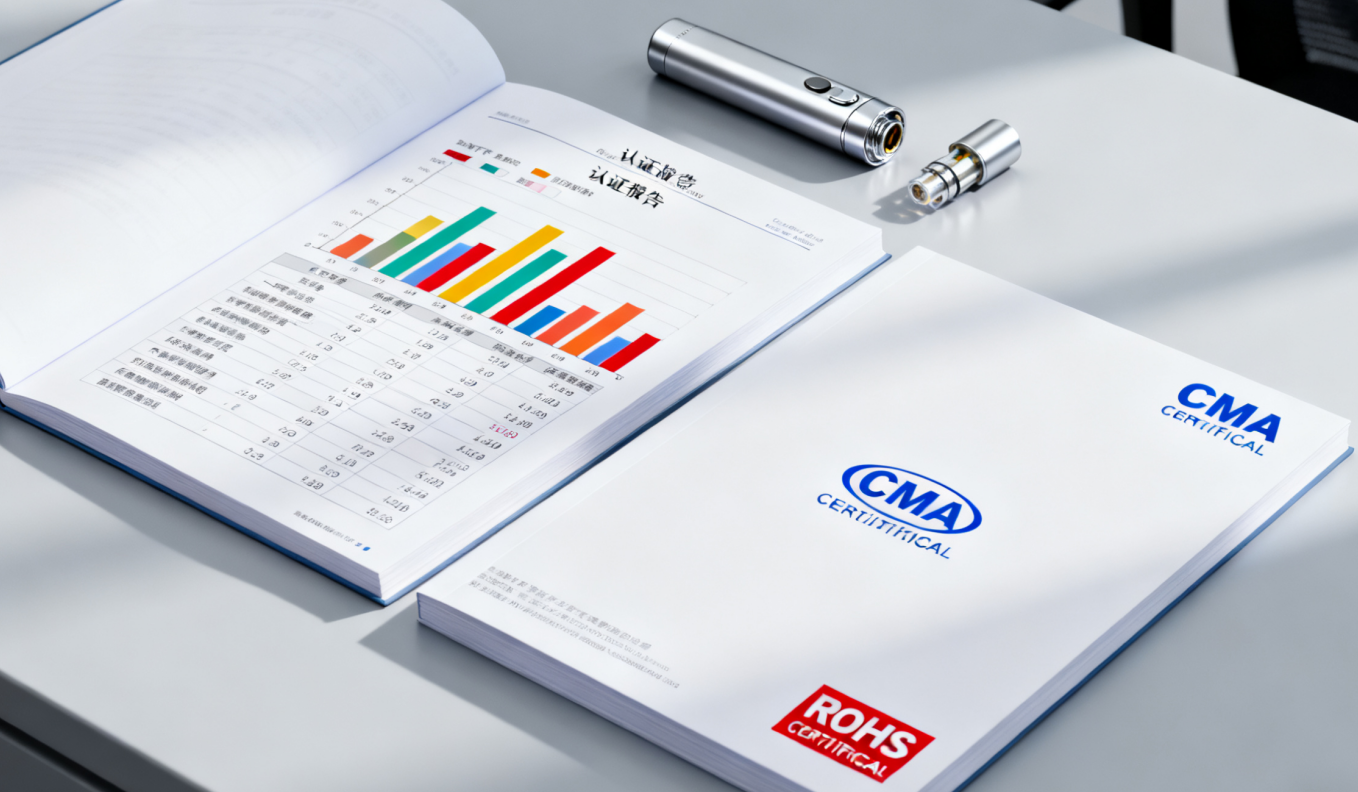
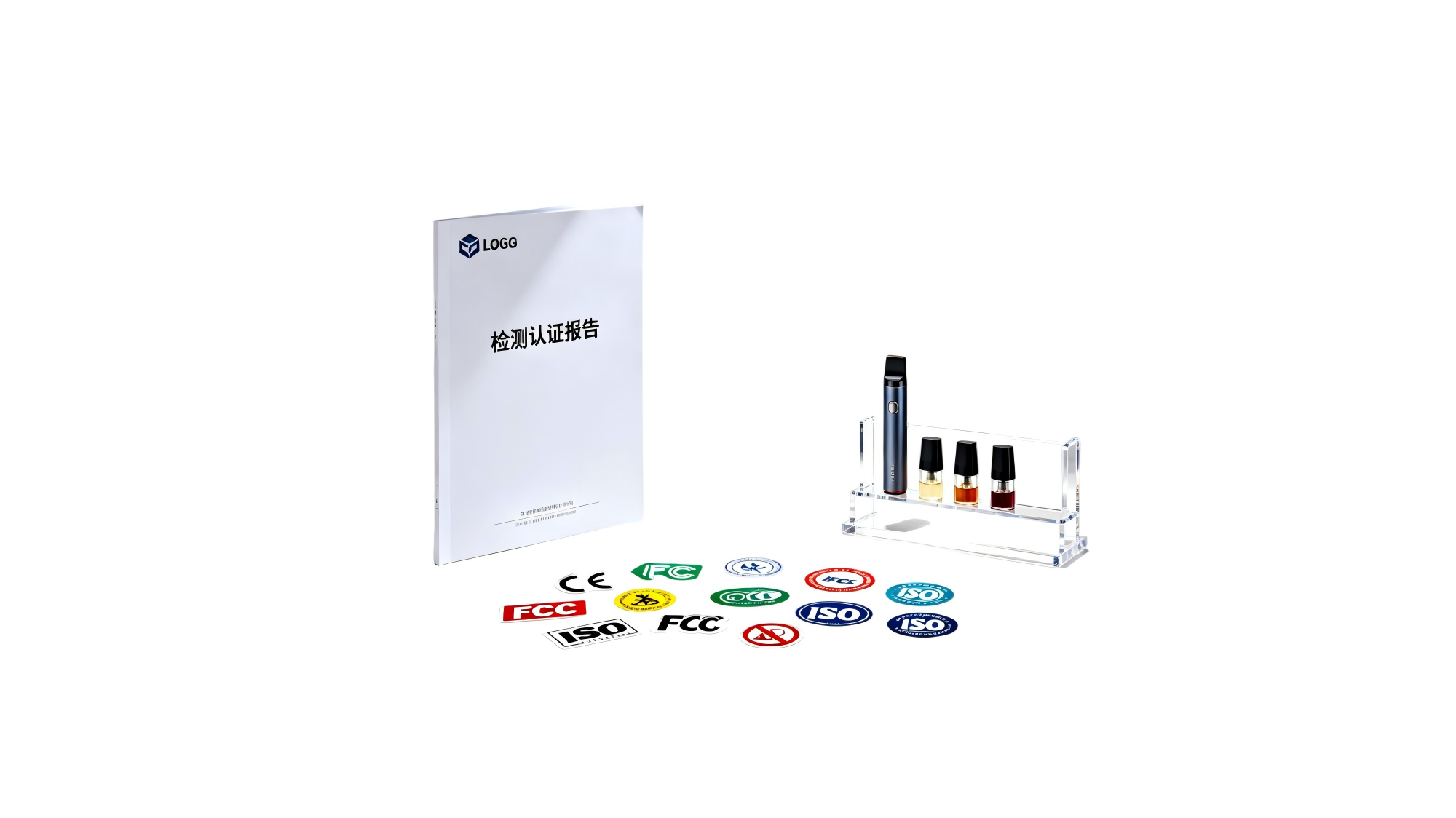
E-cig regulations vary by region (e.g., EU’s TPD, US FDA’s PMTA). A mold designed for the EU market may not comply with US size restrictions (e.g., minimum tank capacity), leading to mold obsolescence. To mitigate this, research target market regulations before design: for example, ensure mold dimensions meet FDA’s 2ml maximum e-liquid capacity rule. Conduct third-party compliance testing (e.g., RoHS for material safety) to avoid costly redesigns.

3.2 Technical Risks: Validate Designs Early

Design flaws (e.g., weak structural points, poor heat dissipation) can cause mold damage or product recalls. Use 3D printing to create prototypes and test for durability (e.g., drop tests, heat resistance). For example, a prototype with a faulty battery compartment can be revised before mold manufacturing, saving $5,000-$10,000 in rework costs. Additionally, conduct mold trial runs with small batches (50-100 units) to identify issues before mass production.

3.3 Supply Chain Risks: Diversify Suppliers

Overreliance on a single supplier can lead to delays if they face capacity issues (e.g., labor shortages, equipment breakdowns). Maintain 2-3 alternative suppliers for critical components (e.g., mold steel, plastic resins) and sign backup agreements. For example, if a primary supplier’s CNC machines fail, a backup supplier can take over within 3 days, minimizing timeline disruptions.

Conclusion

E-cig private mold design requires a balance of cost control, timeline efficiency, and risk mitigation. By optimizing material selection, streamlining project phases, and proactively addressing regulatory and technical risks, brands can develop high-quality private molds that meet market demands while protecting their bottom line. Remember: successful mold design is not just about creating a unique product—it’s about managing the entire process to deliver value efficiently.

Detailed Overview of the Entire E-Cigarette OEM Cooperation Process: Every Step from Inquiry to Delivery

Refillable Pod Kit 3
Electronic Cigarette OEM Cooperation Process

In the fast-paced electronic cigarette industry, E-Cigarette OEM has become a core solution for brands. It helps them cut costs, skip R&D barriers, and launch products quickly. The entire process needs close coordination between clients and factories. Below is a detailed breakdown—from initial communication to final delivery.

Step 1: Initial Inquiry & Requirement Confirmation

Initially, the process starts when the client sends an inquiry. This inquiry lays the groundwork for successful E-Cigarette OEM cooperation.

To let the OEM factory assess feasibility and quote accurately, clients must provide clear, specific requirements. These include product specs (e.g., pod system, battery capacity), customization needs (logo placement, colors), and order scale (trial 500–2,000 units, bulk estimates).

The factory responds within 1–3 working days. It provides a detailed quote (material, labor, customization costs), a preliminary timeline, and clarifies unclear requirements.

Step 2: Sample Development & Approval

Once the client confirms the quote and basic terms, the process moves to sample development. This step is critical for E-Cigarette OEM projects—it checks if the product matches expectations.

First, engineers design a 3D model or prototype, focusing on structural safety (e.g., leak-proof design) and user experience (e.g., mouthpiece comfort).

Then, the factory produces 5–20 samples with mass-production materials. For brands prioritizing aesthetics, samples often match the style of modern-design vape products.

Finally, the client tests samples (performance, appearance, compliance) and approves them formally (in writing/email).

Sample Development Workshop

Sample Development Workshop: Engineers test prototypes for OEM projects.

Step 3: Contract Signing & Deposit Payment

After sample approval, both parties sign a legally binding contract outlining E-Cigarette OEM terms clearly.

The contract includes product details (approved specs, ISO 9001 standards), commercial terms (30% deposit upfront, 70% before shipment), and liability clauses (delay penalties, refunds for defects).

Once signed, the client pays the 30% deposit—funds the factory uses to buy materials and reserve production capacity.

Step 4: Mass Production

This phase turns the approved sample into large-scale production (15–30 days, based on quantity) and is a core step in E-Cigarette OEM.

First, the factory sources certified materials (high-quality batteries, food-grade e-liquid) and inspects them to avoid substandard items.

Workers calibrate equipment (injection molding machines, assembly lines) to match sample specs.

Inspectors check products at every stage (e.g., e-liquid filling accuracy ±0.1ml) to prevent defects.

Automated Production Line

Automated Production Line: Ensures efficient manufacturing for OEM orders.

Step 5: Final Quality Audit & Packaging

Before shipping, the factory does a 100% final quality audit (FQA) to verify products meet standards.

Inspectors test performance (puff count, battery life), appearance (no scratches, aligned logos), and compliance (nicotine content reports).

For products competing with modern-design options, appearance checks are critical—visual quality affects consumer choices.

After FQA, products are packaged as requested (blister packs, branded cartons) with protective materials (bubble wrap).

Step 6: Shipping & Balance Payment

The factory coordinates with logistics (DHL for small batches, sea freight for bulk) based on the client’s shipping method and destination.

Before dispatch, the client pays the 70% balance. The factory then sends a shipping confirmation with a tracking number.

For international E-Cigarette OEM orders, the factory prepares documents (invoice, customs certificates) to avoid delays.

Step 7: Post-Delivery Support

Cooperation continues after delivery. The factory offers post-delivery support for E-Cigarette OEM clients.

If defects occur (e.g., battery issues), the factory replaces products or refunds per the contract.

Feedback on performance and market response is used to optimize future orders (e.g., flavor adjustments).

Long-term partnerships often involve sharing trends (e.g., new nicotine salts) to keep clients competitive in the E-Cigarette OEM space.

Conclusion

Ultimately, the E-Cigarette OEM process relies on clear communication, strict quality control, and timely coordination.

Choosing a reputable OEM factory (certified, mature lines, strong after-sales) ensures a smooth partnership and products that meet customer needs and regulations.

By following these steps, brands can streamline their E-Cigarette OEM journey and launch quality products efficiently.

ERP weaves transparency into collaboration—share real-time key info, streamline workflows, and make cooperation smoother for mutual success

E-Cigarette Factory ERP Transparency & Compliance

In the fast-paced e-cigarette industry, market demands shift rapidly and regulatory compliance is non-negotiable. Customer trust here hinges not only on product quality but also on visibility into the entire order lifecycle—and proof of adherence to strict industry regulations.

For e-cigarette manufacturers, delays in production, ambiguous material sourcing, or gaps in compliance documentation can lead to lost business opportunities, regulatory fines, and irreparably damaged partnerships. To address these pain points, our factory has implemented a compliance-centric Enterprise Resource Planning (ERP) system.

This system transforms “black-box” production into a transparent, collaborative process while embedding regulatory requirements into every step. The integration of technology not only enhances customer satisfaction but also mitigates compliance risks, creating a win-win ecosystem.

ERP System Portal showing real-time e-cigarette order progress

The Unique Challenges of E-Cigarette Production: Compliance as a Cornerstone

E-cigarette manufacturing is defined by two overlapping imperatives: complex production workflows and rigorous regulatory oversight. Unlike standard consumer goods, e-cigarettes are governed by region-specific rules.

  • U.S. Market: The FDA’s PMTA requires detailed product safety data, including raw material origins and lab test results for every batch.
  • EU Market: The TPD mandates nicotine limits (≤20mg/mL), child-resistant packaging, and traceability codes.
  • Chinese Market: GB 41700-2022 sets strict standards for e-liquid hygiene, battery safety, and labeling.

Historically, customers struggled to verify compliance—vague updates like “Your order meets regulations” provided no actionable evidence. Our factory recognized transparency and compliance are inseparable: the ERP system turns compliance into a real-time, trackable process.

How the ERP System Embeds Compliance into Real-Time Tracking

Our cloud-based ERP platform maps every production step to regulatory requirements. For customers, compliance is visible in every portal update. Below are key features:

1. Raw Material Compliance: Traceability from Supplier to Shelf

Regulators prioritize ingredient transparency for high-risk components (nicotine, batteries). The ERP creates a digital audit trail, letting customers:

  • View supplier credentials (ISO 9001, GMP) with expiration alerts (e.g., “Supplier X’s TPD cert expires in 60 days”).
  • Track batch data (e.g., “Batch #N2305: 99.8% pure nicotine, stored 15-25°C, compliant with PMTA 21 CFR 1140”).
  • Flag restricted substances (diacetyl, non-UN batteries) and block non-compliant orders.

Customers submitting PMTA/TPD apps can export a pre-built “Material Compliance Report” in minutes—no manual data compiling.

2. Production Process Compliance: Real-Time Adherence

IoT sensors and production software monitor compliance in real time. Updates include:

  • Nicotine dosing: Sensors track concentration (e.g., “Batch #E450: 18mg/mL, within TPD limits”) and log corrections.
  • CRP verification: Records when child-resistant caps are applied (tested per ASTM D3475) with video evidence.
  • Hygiene logs: Tracks cleaning schedules (e.g., “Mixing room sanitized twice daily per GB 41700-2022”).

Example: A UK customer used the portal to prove 100% CRP compliance to MHRA, avoiding a market recall.

3. Quality Control: Compliance-Driven Testing

QC aligns with regulatory standards. Customers can:

  • Filter results by regulation (e.g., “View PMTA battery tests”).
  • Compare results to limits (e.g., “Pod leakage: 0.01mL/24h ≤ TPD’s 0.05mL/24h”).
  • Store tamper-proof test docs (lab certs, signatures) for audits.

Failed batches trigger corrective workflows: customers are notified, root causes logged, and re-test results shared post-compliance.

4. Compliance Documentation: One-Click Access

The ERP’s Compliance Document Hub centralizes paperwork:

  • Pre-filled forms (PMTA Section 8, TPD Article 15) with auto-populated order data.
  • Single-PDF batch records (material receipts, QC results) for regulator submission.
  • Audit trails for document access (e.g., “Customer X viewed Batch #B789’s PMTA report”) to meet FDA 21 CFR Part 11.
E-cigarette production line with ERP IoT sensors

Case Study: ERP Compliance Saved a Customer from PMTA Rejection

A U.S. e-cig brand used our ERP to launch a new pod system (needing PMTA approval):

  1. Verified e-liquid ingredients from FDA-registered suppliers (batch purity reports in the Document Hub).
  2. Caught a minor nicotine deviation (19.5mg/mL vs. 20mg/mL) via real-time dosing data, approving a quick fix.
  3. Exported a 120-page PMTA batch record in 10 minutes (vs. 10+ hours manually).
  4. Shared CRP test videos with FDA in hours, avoiding PMTA delays.

The brand’s regulatory manager: “Without ERP tracking, we’d have missed the nicotine issue and faced rejection. Now we prove compliance at every step—cutting our timeline by 30%.”

Fostering Collaboration: Compliance as a Shared Goal

The ERP turns compliance into a partnership. Examples:

  • Regulatory updates: Alerts for new rules (e.g., 2024 TPD labeling) with change checklists.
  • Pre-audit support: Our team uses ERP data to help customers prepare (e.g., “Batch #C123 is 100% compliant with X rule”).

Conclusion

In e-cig manufacturing, transparency without compliance is incomplete. Our ERP embeds regulations into every order step, giving customers visibility to verify and defend compliance.

Future enhancements: AI-powered compliance alerts (e.g., “New UK labeling rules impact your next order”) and integration with regulatory databases (FDA’s URLS) for auto-submission.

Ultimately, we aim to make compliance as transparent as order tracking—so customers focus on innovating, not navigating red tape.

E-cigarette manufacturing factory: How to Meet Demands from Small-Batch Trial to Million-Scale Production

E-cigarette Manufacturing: How to Meet Demands

E-cigarette manufacturing has become a dynamic sector, with brands often starting with small-batch trials to test market responses before scaling to million-scale production. This transition requires careful planning to balance flexibility, efficiency, and quality—three pillars that define success in the competitive E-cigarette industry.

Understanding Demand Differences: Small-Batch vs. Large-Scale

Small-batch trial production typically serves two core goals: product iteration and market validation. Manufacturers may produce 500 to 5,000 units to test new designs (e.g., compact pod systems) or flavor profiles, relying on quick adjustments to refine prototypes. In this phase, demand is characterized by unpredictability—changes in specifications (such as battery capacity or e-liquid viscosity) are common, and production lines must adapt rapidly.

In contrast, million-scale production caters to mass-market demand, where consistency and cost-efficiency take priority. Brands need to deliver uniform E-cigarette units to avoid recalls and maintain consumer trust, while also optimizing per-unit costs to compete in global markets. Here, demand is stable but high-volume, requiring production lines to operate at near-maximum capacity with minimal downtime.

Strategies for Small-Batch Trial Production

To meet small-batch demands, manufacturers should invest in modular production setups. Unlike fixed assembly lines, modular systems allow for easy reconfiguration—for example, switching from assembling disposable E-cigarettes to rechargeable pods in a matter of hours. This flexibility reduces setup time and lowers the cost of testing multiple prototypes.

Rapid feedback loops are also critical. After producing a small batch, manufacturers should partner with focus groups or regional distributors to collect data on usability and performance. For instance, if a trial batch of E-cigarettes reports frequent leaks, engineers can adjust the cartridge seal design and produce a new batch within days. This iterative process ensures that only refined products move to large-scale production.

Additionally, small-batch production benefits from lean inventory management. Sourcing small quantities of raw materials (e.g., lithium-ion batteries, food-grade e-liquid ingredients) prevents overstocking, while working with local suppliers reduces lead times for last-minute material adjustments.

Small-Batch E-Cigarette Production Line
A modular small-batch production line for E-cigarettes, showing technicians adjusting prototype assembly stations to test new pod designs.

Scaling to Million-Scale Production: Key Considerations

Scaling to million-scale E-cigarette production requires a shift from flexibility to standardization, starting with automation. Automated assembly lines—equipped with robotic arms for precise tasks like cartridge filling and component soldering—can boost throughput from 1,000 units per day (small-batch) to 50,000+ units per day. Automation also reduces human error, a critical factor for meeting strict regulatory standards (e.g., the EU’s Tobacco Products Directive or U.S. FDA guidelines) that govern E-cigarette safety.

Supply chain resilience is another must. For large-scale production, manufacturers need to secure long-term contracts with global suppliers to ensure a steady flow of raw materials. This includes diversifying supplier networks to mitigate risks like material shortages or geopolitical disruptions. For example, a manufacturer might source batteries from both Chinese and Korean suppliers to avoid production halts if one region faces delays.

Capacity planning is equally important. Before scaling, manufacturers should conduct a thorough demand forecast to determine the number of production lines needed. Building redundant lines (e.g., two parallel lines each capable of producing 3 million units monthly) provides a safety net for sudden demand surges or equipment failures.

Automated Million-Scale E-Cigarette Manufacturing Facility
An automated production floor for million-scale E-cigarette production, with robotic arms handling cartridge filling and machine vision systems inspecting final units.

Maintaining Quality Across All Production Scales

Quality control (QC) is non-negotiable at every stage of E-cigarette manufacturing. In small-batch trials, QC teams focus on validating product safety—testing for e-liquid contaminants (e.g., heavy metals) and ensuring battery safety. For large-scale production, real-time QC systems (such as machine vision cameras) inspect 100% of units for defects (e.g., misaligned components or faulty sensors) at high speed.

Regulatory compliance also ties into quality. Manufacturers must document every step of production, from raw material sourcing to final packaging, to meet regional reporting requirements. This documentation not only avoids fines but also builds transparency with consumers, who increasingly prioritize safe, compliant E-cigarette products.

Leveraging Digital Tools for Seamless Transition

Digital technologies bridge the gap between small-batch and large-scale production. Enterprise Resource Planning (ERP) software, for example, tracks inventory, production schedules, and QC data across both phases. In small-batch trials, ERP tools help manage small-quantity material orders; in large-scale production, they optimize scheduling to minimize waste and maximize line efficiency.

Internet of Things (IoT) sensors further enhance visibility. Installed on production lines, these sensors monitor equipment performance in real time, predicting maintenance needs to prevent unexpected downtime. For million-scale operations, this proactive approach ensures that production stays on track to meet high-volume demands.

Conclusion

The journey from small-batch trial to million-scale E-cigarette production is a strategic process that demands adaptability, investment in technology, and a relentless focus on quality. By embracing modular systems for small batches, automation for large-scale output, and digital tools to streamline the transition, manufacturers can meet evolving market demands while maintaining competitiveness. As the E-cigarette industry continues to grow, those who master this transition will be best positioned to capture opportunities in both niche and mass markets.

Industry White Paper: Forecast and Forward-looking Insights into the Development of Next-Generation E-Cigarette Technology

Next-Generation E-cigarettes Development Insights

Industry White Paper | Published: May 2024 | For: Stakeholders, Regulators, Researchers

Abstract

Global demand for reduced-harm nicotine products is on the rise. This trend is pushing next-generation e-cigarettes toward transformative innovation.

Three key factors drive this shift: technological advances, evolving regulatory frameworks, and changing consumer expectations for safety and sustainability.

This paper analyzes core trends (precision harm reduction, smart devices, circular design) and key challenges (regulatory gaps, consumer trust), while offering actionable insights for industry players.

By 2027, next-gen e-cigarettes are expected to hold over 45% of the global e-cigarette market—with safety, personalization, and sustainability as defining competitive advantages.

1. Core Trends Shaping Next-Generation E-cigarettes

1.1 Precision Harm Reduction: Beyond Basic Heating

Traditional e-cigarettes rely on simple coil heating. This design often generates harmful byproducts—such as formaldehyde—when temperatures run too high.

Next-gen devices will solve this issue with two key technologies: adaptive temperature control (ATC) and heat-not-burn (HNB) 2.0. Both use ceramic or metal-alloy heaters to target nicotine release without exceeding 350°C.

According to studies by the EU’s Scientific Committee on Health, Environmental and Emerging Risks (SCHEER), this temperature control cuts toxicant formation by up to 60%.

E-liquid formulation will also advance. Synthetic additives will be replaced with plant-based carriers—like sustainable vegetable glycerin—and nicotine salt variants will deliver smoother hits at lower concentrations, reducing dependency risks.

HNB 2.0 E-cigarette with Temperature Control

Figure 1: HNB 2.0 e-cigarette with real-time temperature monitoring and toxicant reduction metrics.

1.2 Smart Devices: Personalization & Accountability

Consumers are increasingly seeking transparency and control over their nicotine use. This demand is driving the integration of IoT (Internet of Things) capabilities into next-gen e-cigarettes.

Key smart features will include:

  • Mobile app connectivity to track nicotine intake, usage frequency, and battery life;
  • Biometric sensors (e.g., mouthpiece pressure detectors) linked to government IDs to prevent underage use;
  • AI-powered alerts to notify users of excessive usage or potential device malfunctions.

Market research firm Grand View Research projects that smart e-cigarettes will grow at a compound annual growth rate (CAGR) of 28.3% between 2024 and 2030. This growth is fueled by regulatory pressure to curb youth access.

1.3 Circular Design: Reducing Environmental Footprint

The current e-cigarette industry faces a major environmental challenge: it generates over 1.2 billion disposable devices annually, most of which end up in landfills.

Next-gen products will prioritize circularity to address this issue, through three key strategies:

  • Modular designs that let users replace only faulty components (e.g., batteries, heating elements) instead of the entire device;
  • Recyclable or biodegradable materials for casings and e-liquid pods;
  • Take-back programs for used devices, with manufacturers offering incentives (e.g., discounts) to encourage recycling.

Modular Recyclable E-cigarette

Figure 2: Modular e-cigarette design showcasing recyclable components and a biodegradable outer casing.

2. Key Challenges & Strategic Opportunities

2.1 Regulatory Harmonization: A Global Priority

Regulatory fragmentation remains a major barrier for the e-cigarette industry. Rules vary widely across global markets, creating inconsistency for manufacturers.

For example, the EU’s Tobacco Products Directive (TPD) mandates strict toxicant testing for e-cigarettes. In contrast, some Asian markets—such as Indonesia—have yet to implement comprehensive regulatory frameworks.

Opportunity: Industry players can proactively align with global best practices (e.g., adhering to the U.S. FDA’s Premarket Tobacco Product Application (PMTA) standards) and engage with regulators to shape evidence-based policies. This collaboration will create a consistent framework that balances innovation and public health.

2.2 Building Consumer Trust Through Transparency

Misinformation about e-cigarette safety has significantly eroded consumer trust in recent years. This lack of trust poses a challenge for brands launching next-gen products.

Brands can differentiate themselves and rebuild trust by prioritizing transparency. Key actions include:

  • Publishing third-party lab reports on toxicant levels to validate safety claims;
  • Using blockchain technology to trace ingredient origins, ensuring authenticity and quality;
  • Launching educational campaigns to clarify the relative risks of e-cigarettes vs. traditional combustible tobacco.

3. Conclusion

Next-generation e-cigarettes will redefine the nicotine product landscape by centering on three core pillars: safety, personalization, and sustainability.

For industry stakeholders, success will depend on three key actions: investing in precision harm-reduction technologies, embracing smart device innovation, and adopting circular design principles.

Equally important is collaboration with regulators to build a trusted, compliant ecosystem. This partnership will not only help brands capture significant market share but also contribute to public health goals by offering viable alternatives to combustible tobacco.

As the industry evolves, flexibility and a focus on consumer well-being will remain the foundation of long-term growth and credibility.

Analysis of E-Cigarette Screen Trends and Challenges

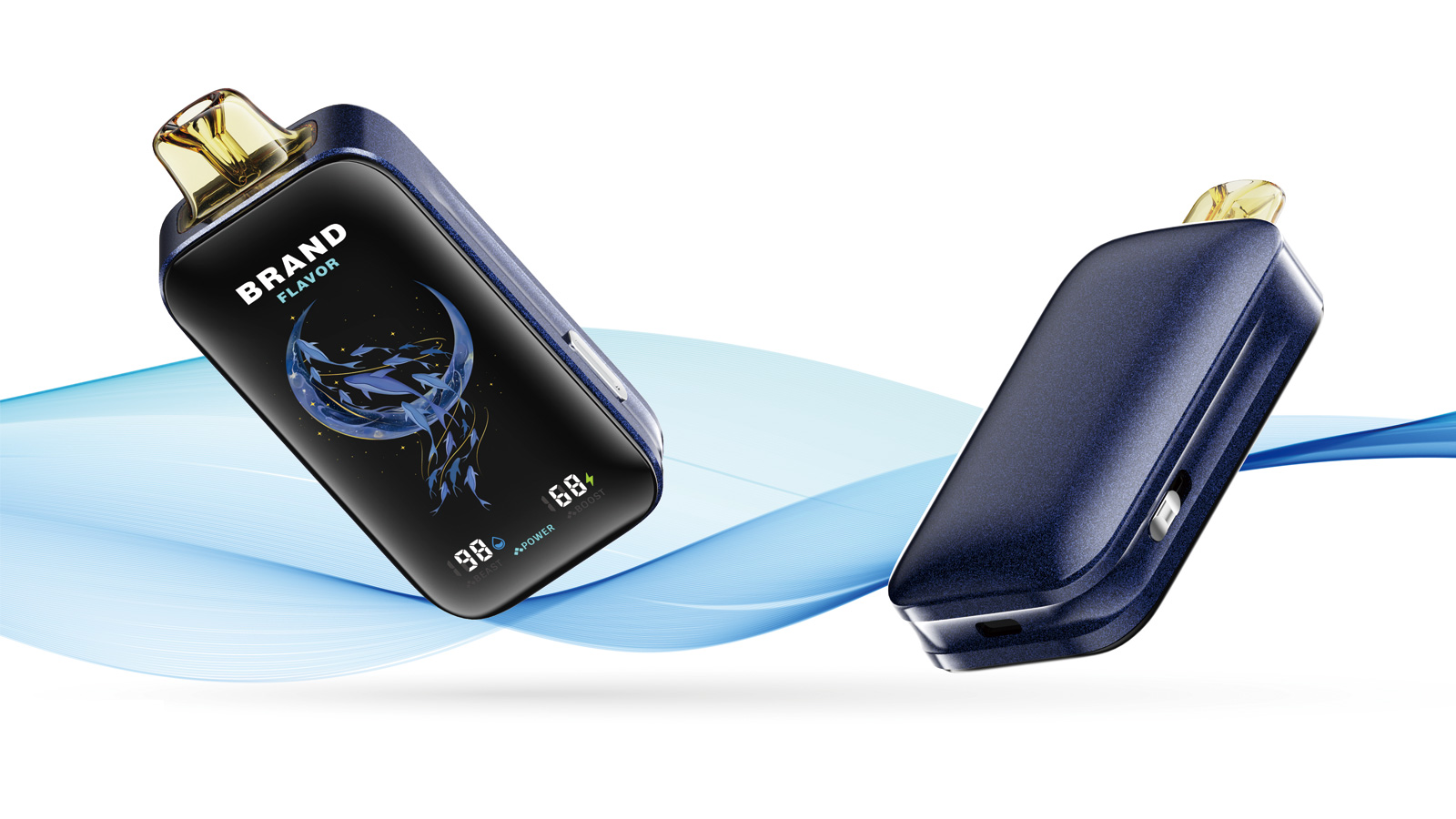
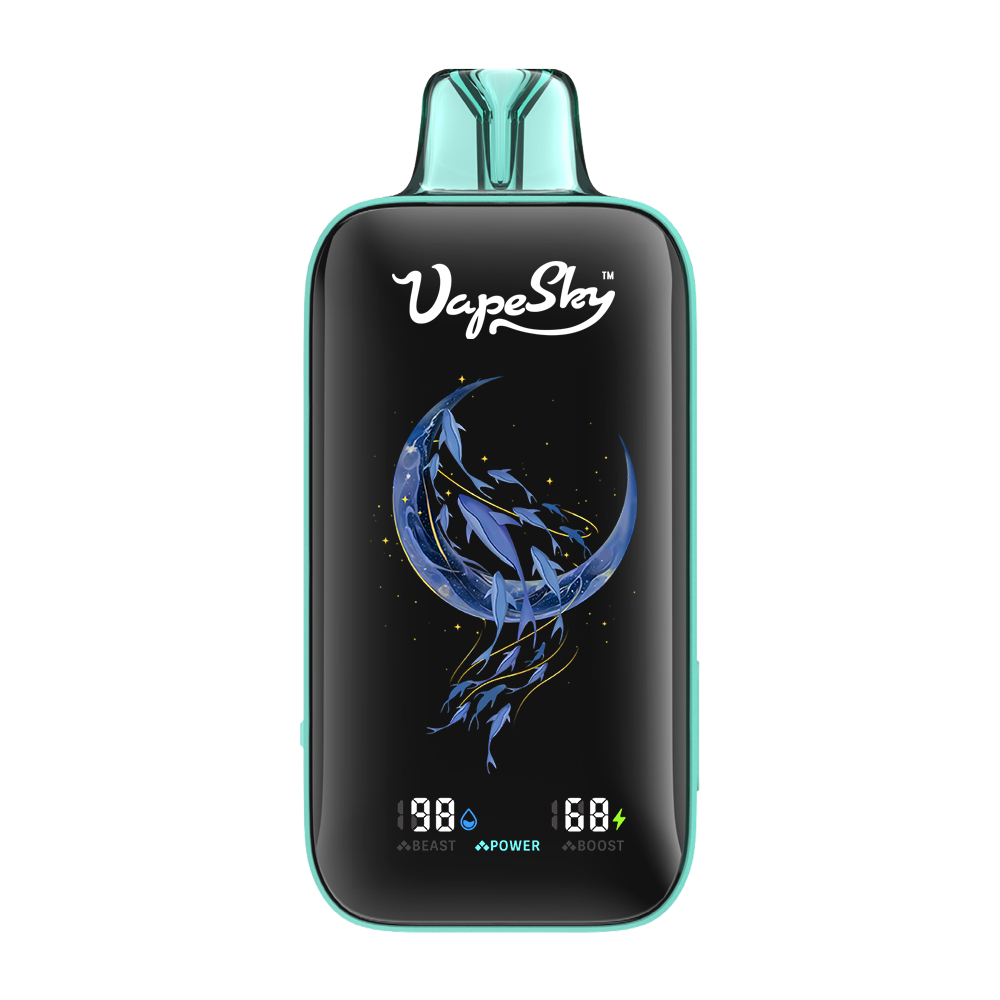
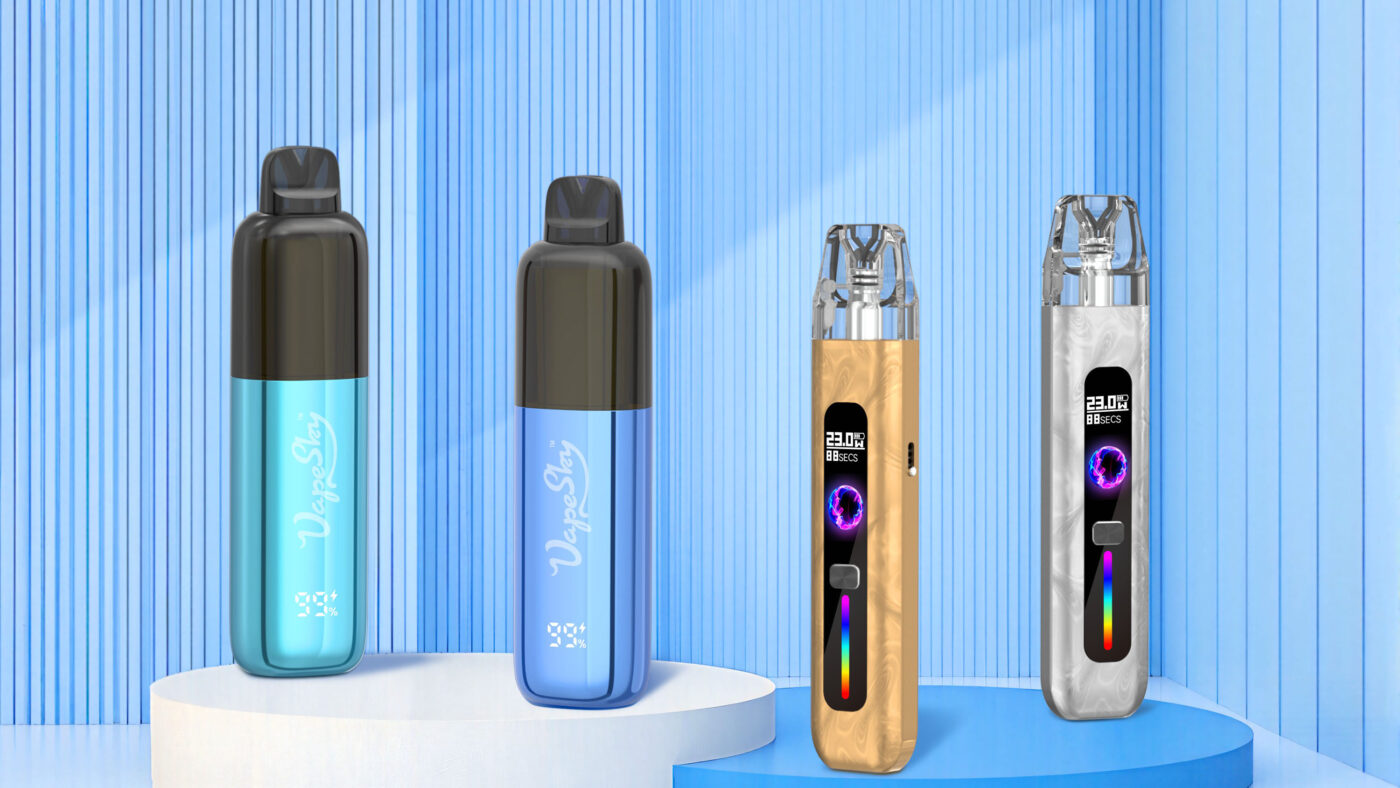
HF009 Poster

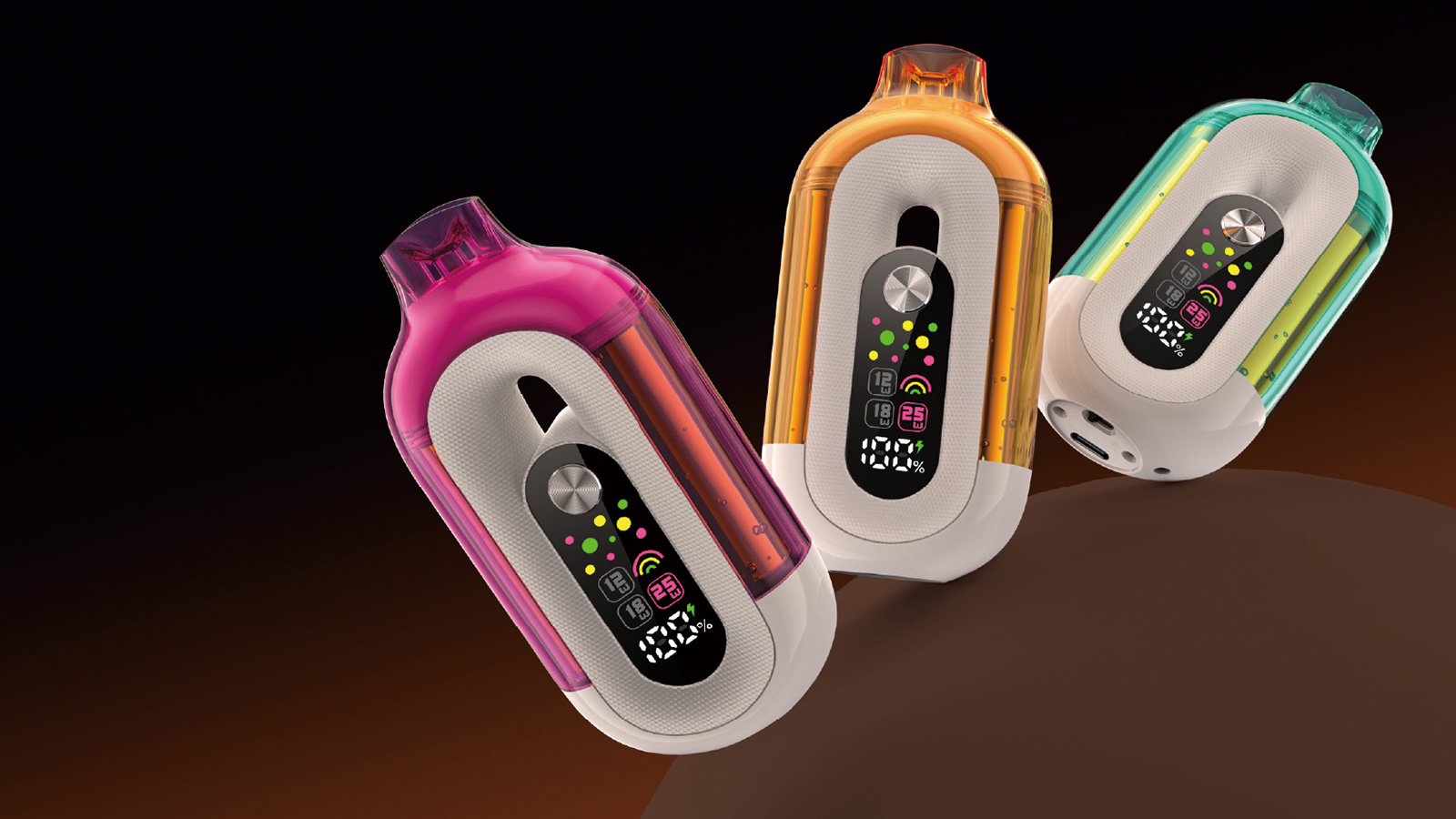
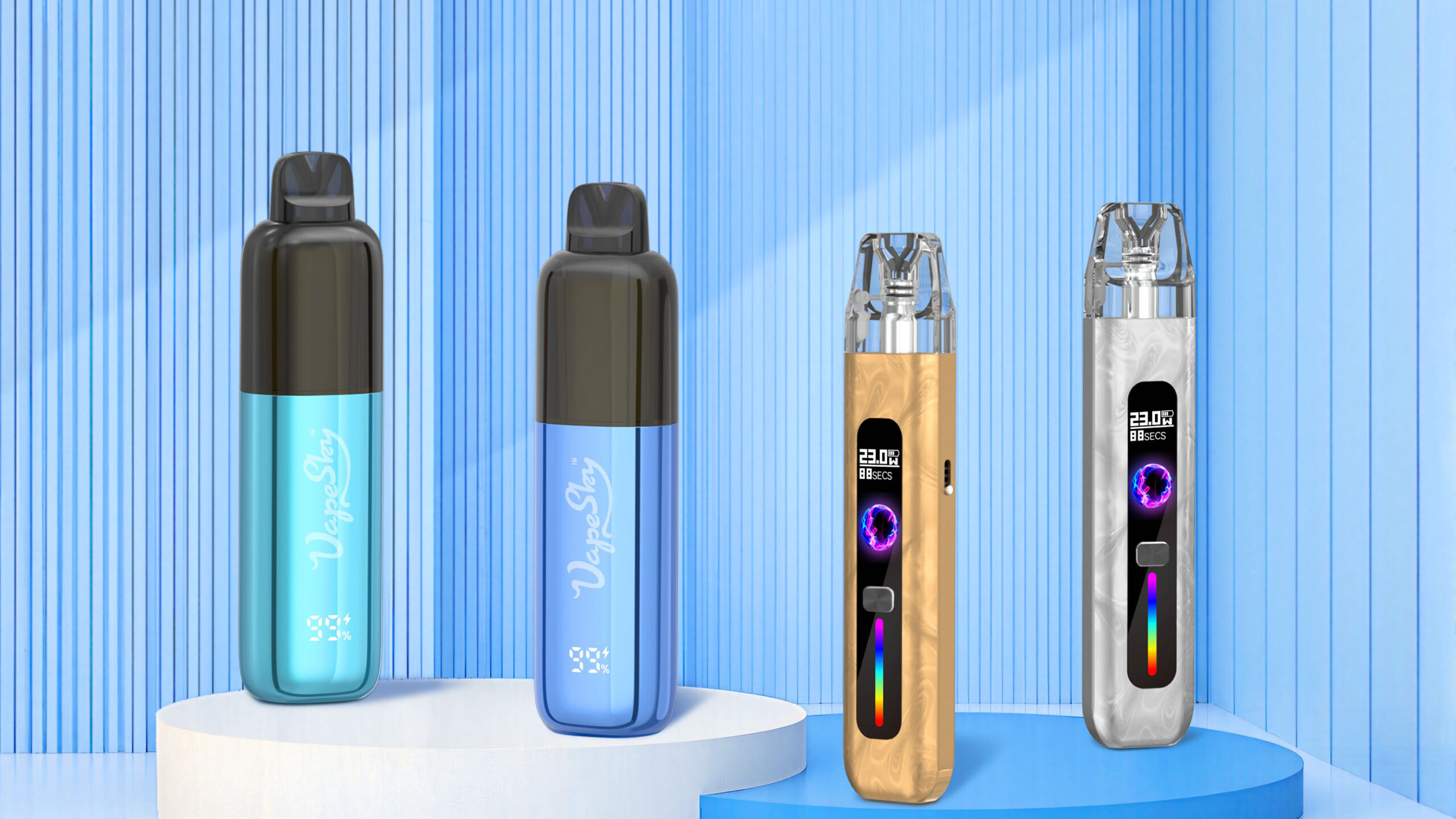
The integration of digital screens has transformed e-cigarettes from simple nicotine delivery devices into sophisticated gadgets, creating both opportunities and challenges for the industry.

The evolution of electronic cigarettes has been nothing short of remarkable. From their humble beginnings as basic vaporization devices, they have transformed into technologically advanced gadgets. At the heart of this transformation lies the integration of digital screens, which have revolutionized user interaction and device functionality.

Current Screen Technology Trends

OLED Displays

Modern e-cigarettes increasingly feature high-resolution OLED screens that offer crisp, clear information even in direct sunlight. These energy-efficient displays provide vital data at a glance.

Touch Interfaces

Many premium devices now incorporate touch screen controls, allowing users to navigate settings, adjust temperature, and monitor usage with intuitive gestures.

Customization Options

Screens now enable extensive personalization, from interface themes to data display preferences, enhancing user experience and device attachment.

Data Tracking

Advanced screens display real-time usage statistics, puff counts, and battery analytics, helping users monitor and potentially reduce their consumption.

Industry Challenges

Regulatory Pressures

As screens make devices more appealing, regulators worldwide are scrutinizing their potential to attract younger users. Compliance with varying international regulations presents significant design challenges.

Battery Life Concerns

High-resolution screens consume substantial power, creating engineering challenges in balancing display quality with acceptable battery duration between charges.

Durability Issues

Screen breakage remains a significant problem for manufacturers, as glass displays are vulnerable to impacts from drops and everyday use, leading to higher failure rates.

Cost Considerations

Implementing quality displays increases manufacturing expenses, creating pricing challenges in an increasingly competitive market while maintaining profitability.

Future Directions

Looking ahead, we can expect to see several developments in e-cigarette screen technology:

  • Integration with mobile applications for enhanced tracking and control
  • Development of more durable, scratch-resistant screen materials
  • Implementation of low-power display technologies to extend battery life
  • Adaptive interfaces that change based on user preferences and habits
  • Potential incorporation of biometric sensors for health monitoring

Conclusion

Screen technology has fundamentally transformed the e-cigarette experience, offering users unprecedented control and information. However, manufacturers face significant challenges in balancing technological innovation with practical concerns around battery life, durability, cost, and regulatory compliance. The future will likely see continued innovation as companies strive to differentiate their products while addressing these complex challenges.