Tag Archives: disposable vapes

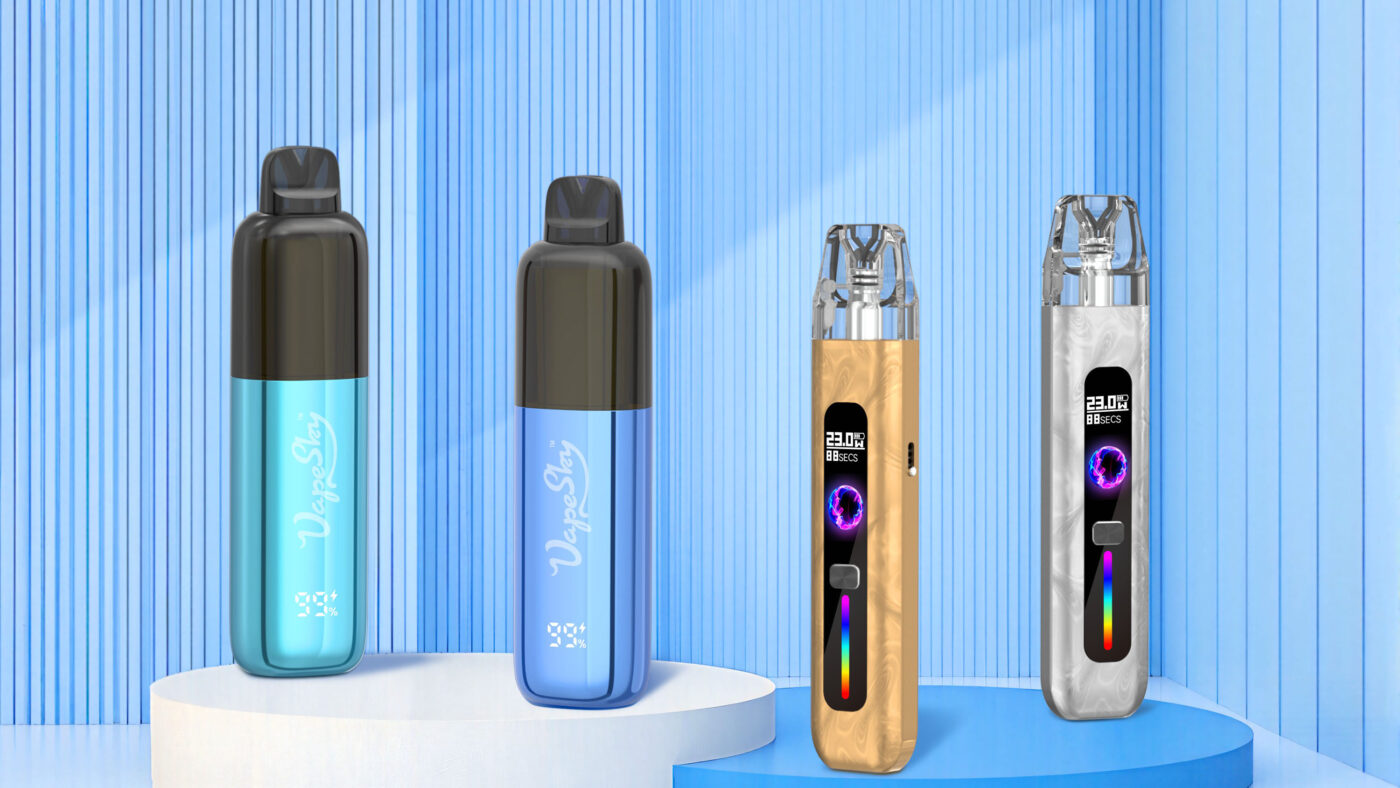
VAPESKY HF005 Luminescent Series: Effortless Pod Changes, Perfect for Beginners!

Refillable Pod Kit 3

First-time vapers often hit snags: pods that won’t click, spilled e-liquid, or a dead device mid-day. To solve these frustrations, VAPESKY built the HF005 Luminescent Series. Specifically designed for beginners, it’s easy to use while adding a fun glow that elevates it beyond basic vapes. Let’s break down why new users love it.

1. Effortless Pod Changes: No Mess, No Stress

Click-and-Lock System: No Fumbling Required

Pod replacement tops new vapers’ complaints. Many devices force you to twist, push hard, or align tiny notches—easy to botch when you’re new. In contrast, the HF005 uses a simple “click-and-lock” system: the pod has a small raised guide, the device a matching groove. Just line them up, press gently, and you’ll hear a click. Done. Even shaky hands manage it effortlessly.

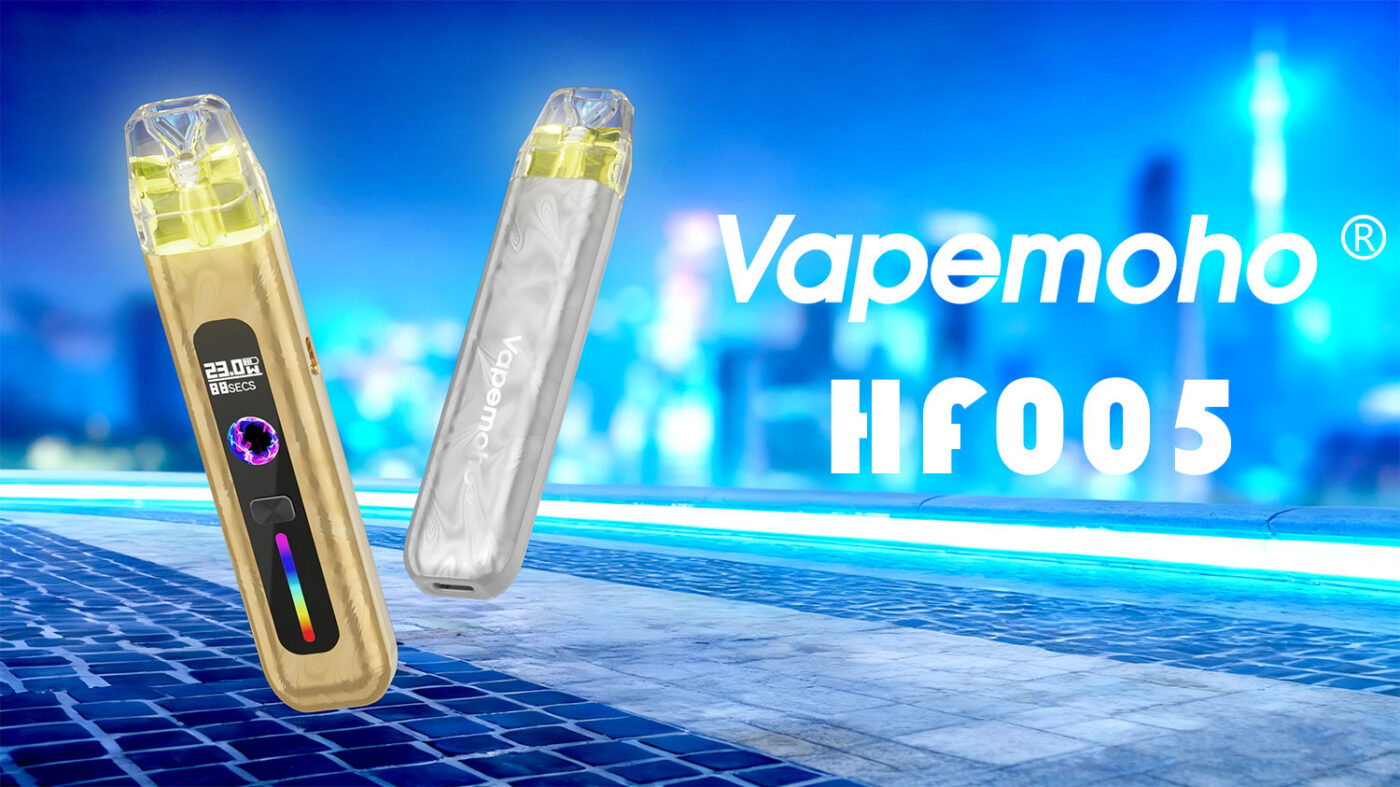
HF005 Luminescent effect in low light (Cool White & Warm Amber):
VAPESKY HF005 Luminescent Series in dark environment

*display effect

Anti-Leak Design: Keep Pockets Clean

Beyond easy swaps, the HF005 stops leaks entirely. A food-grade silicone ring seals the pod’s mouthpiece, while dual O-rings at the device connection block e-liquid seepage. As a result, you can toss it in your bag or pocket without worrying about sticky stains. For example, we tested it for a week: no leaks, even when jostled on the subway.

2ml Pod Capacity: Perfect for Beginners

Each pod holds 2ml of e-liquid—ideal for new users. For one thing, casual use (10-15 puffs/hour) lasts a full day, from commute to evening. For another, if you’re testing flavors, 2ml lets you try a taste without committing to a big bottle. Plus, the transparent pod lets you see when it’s time to swap—no surprises.

Pro Tip: Wipe the pod’s connection with a tissue before swapping. This removes leftover e-liquid, thereby keeping the device smooth long-term.

2. Luminescent Design: Style That Works

Practical Glow for Daily Use

At first glance, the HF005’s glow might seem like a novelty. However, it’s surprisingly practical, especially for new vapers. For instance, work late? The glow lets you find it in your desk drawer without turning on lights (no coworker disruptions). Walk home at night? Keep your phone in your pocket—the glowing device stays visible. Even digging through a dark bag? The soft light cuts clutter—no more searching.

HF005 Luminescent effect in low light (Cool White & Warm Amber):
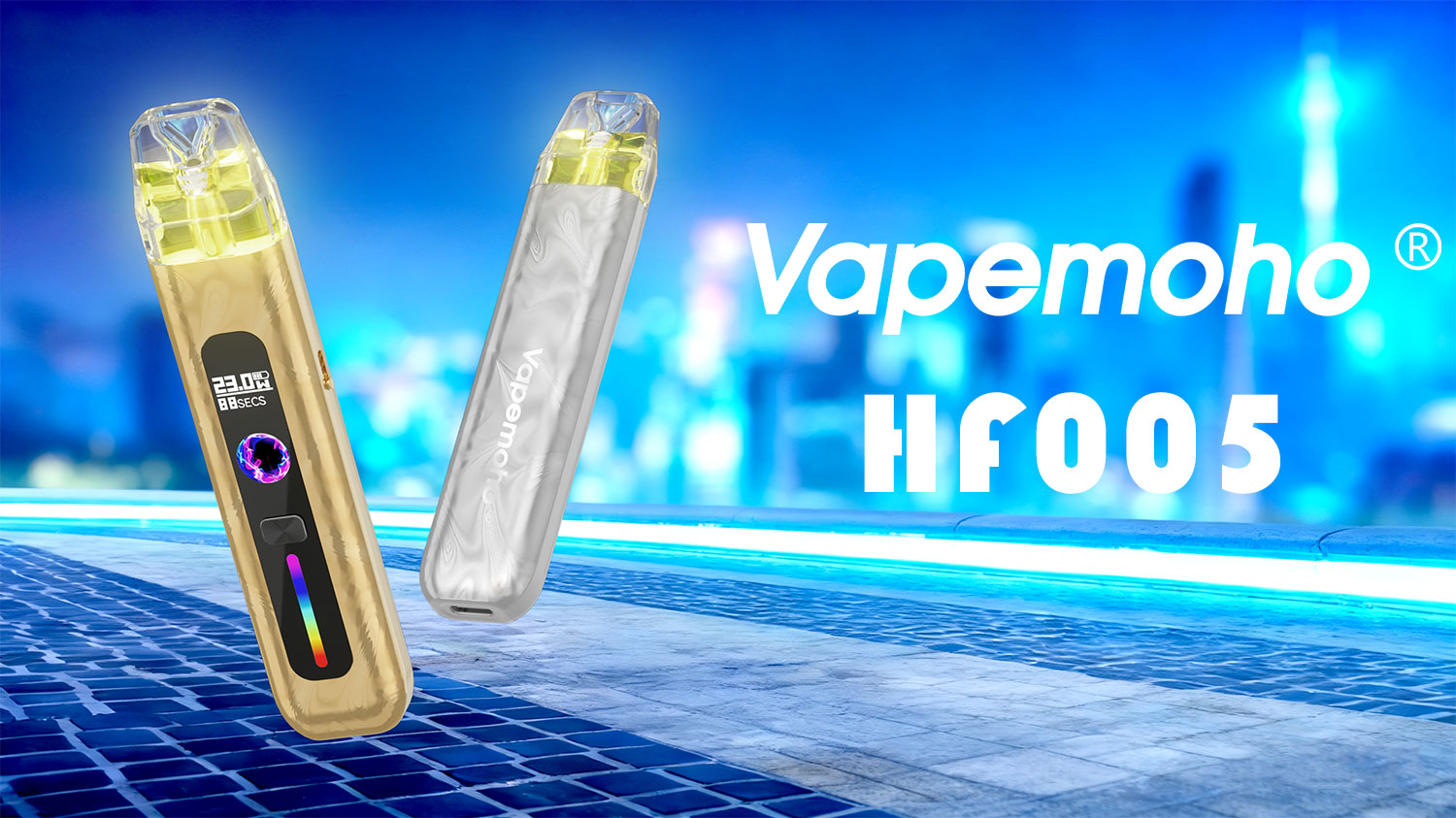
VAPESKY HF005 Luminescent Series in dark environment

*display effect

Durable Luminescent Coating

The glow itself uses non-toxic, wear-resistant material. Consequently, it won’t fade or peel—even with daily use for months. To test this, we rubbed it with a microfiber cloth 50 times/day for two weeks. Not only were there no scratches, but the glow remained intact. Unlike cheap alternatives, it also doesn’t feel greasy or attract dust—staying smooth and clean.

Two Glow Colors: Match Your Style

You can choose between Cool White and Warm Amber. Cool White has a crisp, modern look—it pairs with neutral bags/outfits and is brighter for dark spaces. On the other hand, Warm Amber has a softer glow—great for understated style, perfect for dim cafes. Both charge fast: 10 minutes in light equals 2 hours of glow—ideal for evenings.

3. Flexible Settings: Easy to Customize

Three Coil Resistances: No Tech Jargon

The HF005 supports 0.6Ω, 0.8Ω, and 1.2Ω coils. To clarify, here’s what each feels like:

  • 1.2Ω (MTL): Feels like smoking—gentle restriction (straw-like), smooth vapor. Perfect for ex-smokers. Try mint or tobacco, for example.
  • 0.8Ω (Balanced): Slightly open draw (wider straw), thicker vapor, more flavor. Great for testing beyond MTL. Fruit flavors, in particular, shine here.
  • 0.6Ω (Flavor-Focused): Open draw, warm rich vapor—max flavor. Use after a few weeks. Try complex flavors (vanilla custard). Importantly, short puffs avoid coughing.

5-30W Power: One Button to Adjust

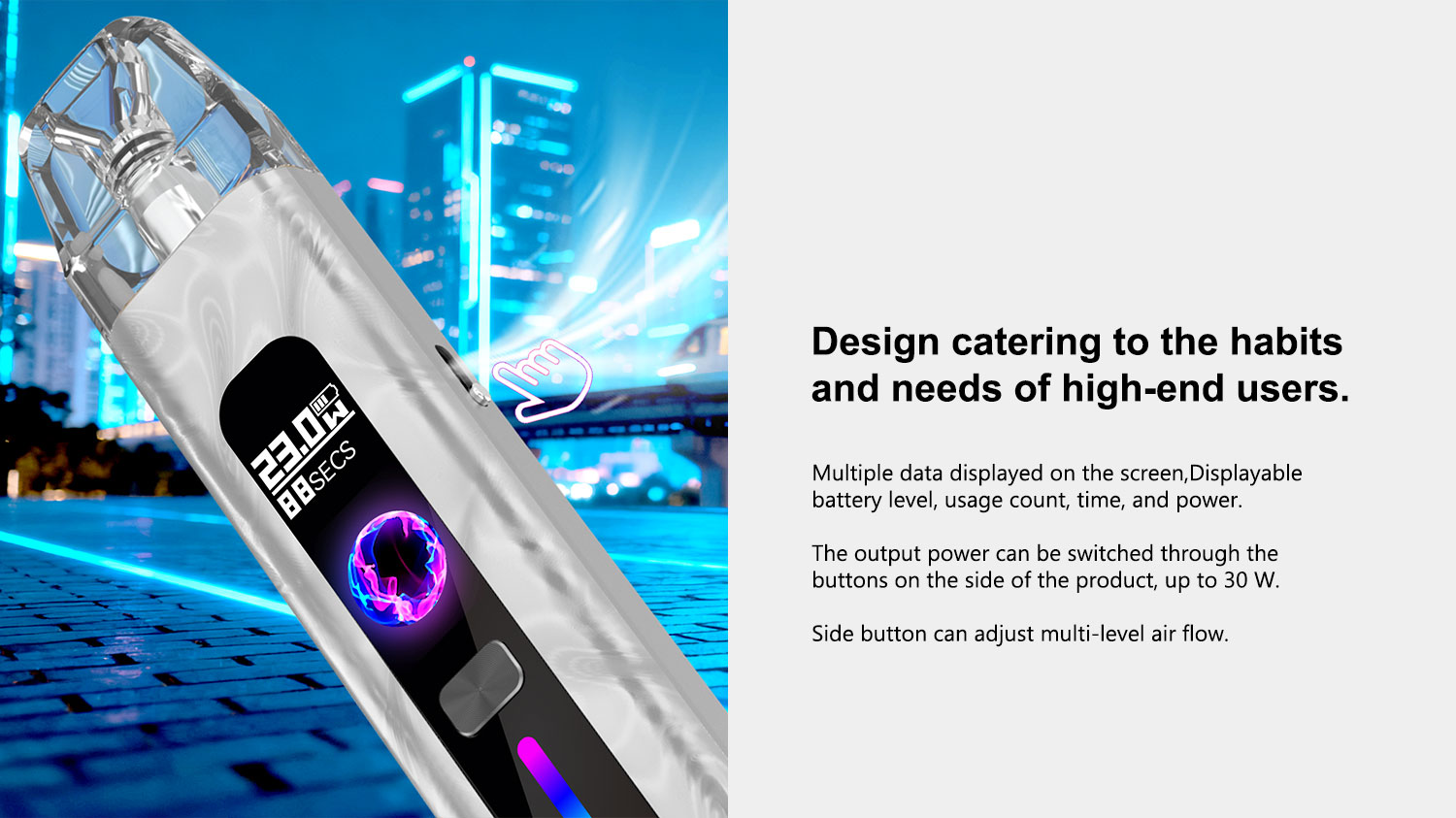
Power adjustment is equally simple: one side button cycles 5W to 30W. Here’s how it works: Press 3x fast (LED flashes). Press once to +1W, hold to cycle faster. The screen shows exact wattage (e.g., “12W”). Beginners, in particular, should start at 10-15W—the sweet spot for most setups, with no coughing.

Built-In Safety Features

Additionally, the HF005 keeps you safe. It shuts off and flashes red on short circuits (e.g., faulty pods)—no overheating. When the battery drops below 3.2V, it flashes 5x and turns off—preventing battery damage. Moreover, a 10-second cut-off stops firing if you hold the button too long—avoiding dry hits or overheating.

4. Long-Lasting Battery: Vape All Day

800mAh Battery: No Mid-Day Charges

New vapers hate dead devices during busy days—meetings, trips, errands. Luckily, the HF005’s 800mAh battery solves this. Here’s the real-world life:

  • Light Use (5-10 puffs/hour): 10-12 hours—full workday + evening out.
  • Moderate Use (10-15 puffs/hour): 8-10 hours—fits most routines.
  • Heavy Use (15-20 puffs/hour): 6-8 hours—gets through busy days.

Fast USB-C Charging

Charging is easy too: it uses a USB-C port (same as most phones)—no extra charger needed. Furthermore, the 1m cable lets you vape while charging (e.g., at your desk). It charges fast: 0-100% in 1.5 hours. For example, 10 minutes of charging (while making coffee) gives 15%—enough for hours of light use.

LED Battery Indicator

Finally, the LED screen shows battery level at a glance:

  • Green (70-100%): Full charge—good for the day.
  • Yellow (30-70%): Medium charge—charge overnight.
  • Red (0-30%): Low charge—plug in soon (1-2 hours left).

Why the HF005 Is Perfect for Beginners

Overall, the HF005 stands out because its features work together to make vaping easy, not overwhelming. New users say: “No more spilled pods,” “The glow saved me from dropping it,” “I don’t need to Google settings.” These small wins, in turn, let you focus on enjoying vaping—not figuring out the device.

It’s durable too: tough ABS plastic survives drops (tested: waist height onto wood, no damage). Besides that, the pod connection is reinforced—won’t wear out after hundreds of swaps. VAPESKY also offers a 1-year warranty—replacements for faulty parts, free of charge.

When you buy the HF005, you get bonuses: 2 extra pods, a microfiber cloth, and a photo guide (no confusing text).

In short, vaping should be simple—especially for beginners. The HF005 takes the stress out. Try it today—you’ll wonder how you vaped without it.

E-liquid Cooperation: Compliant, Tasty, Stable | Manufacturing & Customization

HF005-intro-1

📌 Core Value | In the global e-liquid market, our cooperation model focuses on high-demand products like disposable vapes and refillable pod kits, integrating 5 core advantages to meet brand needs.

✅ Compliance (Pillar 1) – The foundation of our trust. We adhere to global standards (U.S. FDA PMTA, EU TPD) and hold GMP certification, paired with ISO 9001 quality control. Every batch—from nicotine to flavorings—undergoes heavy metal and microbial testing, ensuring no regulatory risks for our partners.

  • Real-time production monitoring to prevent cross-contamination
  • Full batch traceability for easy auditing
  • WARNING: This product contains nicotine. Nicotine is an addictive chemical.

Production Line for Disposable Vapes (e.g., 50,000 Puffs, 850–950mAh Battery)

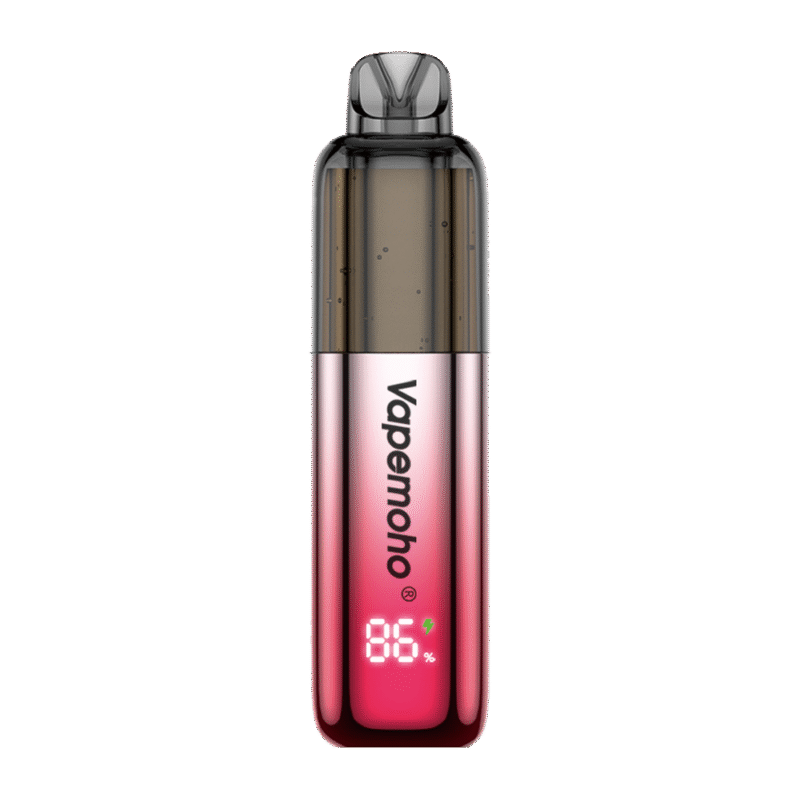
🍃 Taste Consistency (Pillar 2) – Our professional flavorists blend premium flavors for products like the Vapemoho 20,000 Puffs (e.g., Cool Mint, 5% Nic Salt). Every batch is cross-tested to ensure the 1st and 10,000th bottle taste identical—strengthening customer loyalty.

🔒 Product Stability (Pillar 3) – As a professional supplier with 5+ years of experience, we use advanced emulsification to prevent nicotine oxidation or PG/VG separation, ensuring a 24-month shelf life for all products.

📦 Manufacturing & Customization – Scalability for Every Brand

We serve regions including the Arab World, Southeast Asia, Europe, and the Americas, offering:

  • Batch sizes: 50L (trials) → 5,000L (mass production), with 7-day lead times for urgent orders
  • Customization: Nicotine strength (0mg–50mg), seasonal flavors, and branded packaging
  • Intellectual property support: Trademarks, Design Patents, and Invention Patents

Customization Lab for Refillable Pod Kits (Eco-Friendly & Energy-Saving)

As a trusted partner with stable delivery and high-quality products, we don’t just supply e-liquid—we help you succeed in global markets. Click to learn more about our Vapemoho series and cooperation plans!

Bluetooth smart device ODM: Integrate APP connection and function customization for your products

📱 In today’s smart tech landscape, consumers crave devices that blend connectivity with personalization—and for brands looking to tap into this demand, partnering with a reliable Bluetooth smart device ODM is no longer an option, but a necessity. Unlike generic manufacturers, a specialized Bluetooth smart device ODM doesn’t just produce hardware; it focuses on integrating two critical elements that define modern user experiences: seamless APP connection and tailored function customization—turning your product ideas into market-ready solutions that stand out.

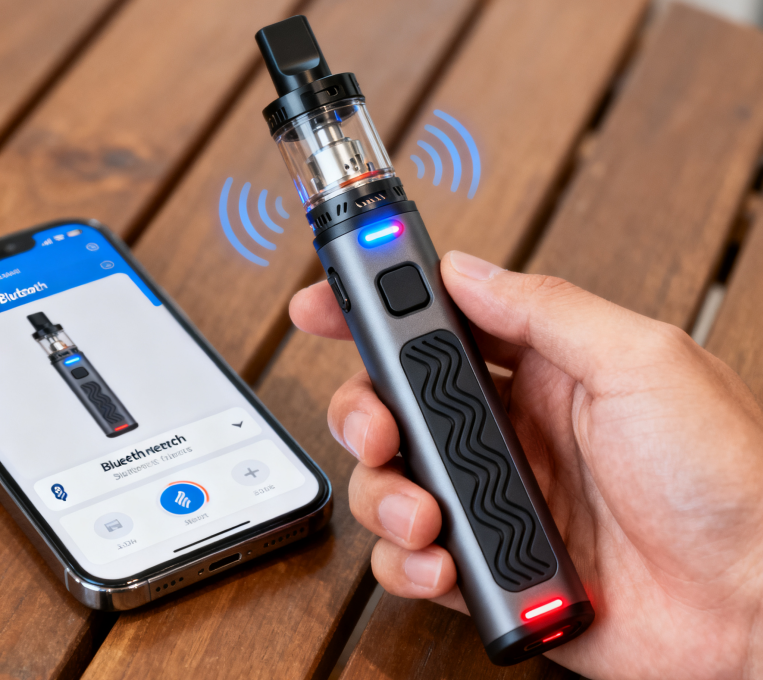
The first pillar of this integration is APP connection—a feature that bridges physical devices with digital convenience. A top-tier Bluetooth smart device ODM doesn’t just add basic Bluetooth pairing; it designs intuitive, stable app interactions that solve real user pain points. For example, if you’re developing a smart vape device, the ODM can build an app that lets users monitor battery life, adjust temperature settings, or track usage—all in real time, with minimal latency. This level of connectivity doesn’t just boost user satisfaction; it also creates opportunities for brand engagement, like sending firmware updates or personalized tips directly through the app.

Smart vape device connected to mobile APP via Bluetooth

🔧 Function Customization: Tailoring to Your Brand’s Unique Needs

While APP connection enhances usability, function customization is what makes your product feel “yours.” A flexible Bluetooth smart device ODM works with you to align hardware and software with your brand’s goals—whether that means adding exclusive features, adapting to industry regulations, or matching your target audience’s preferences. For instance, a wellness brand might want a smart device with a custom health data dashboard, while a luxury brand could prioritize a sleek, minimalist app interface.

The ODM handles the technical heavy lifting: from modifying circuit boards to coding app modules—so you don’t have to invest in costly in-house R&D teams. This end-to-end integration also speeds up your time-to-market—a key advantage in fast-paced industries like consumer electronics.

Custom Bluetooth smart device (e-cig) production in ODM factory

🏭 Why This Integration Matters for Long-Term Success

In a market saturated with “smart” gadgets, generic products fail to resonate. Consumers want devices that fit their lifestyles—and APP connection plus function customization delivers that. A Bluetooth smart device ODM turns this vision into reality by combining technical expertise with a customer-centric approach. Whether you’re a startup launching your first product or an established brand expanding your lineup, this partnership lets you focus on what you do best: building your brand—while the ODM handles the rest.

Ultimately, integrating APP connection and function customization through a trusted Bluetooth smart device ODM isn’t just about creating a better product—it’s about future-proofing your business. As user expectations evolve, you’ll have the flexibility to update features, add new capabilities, and stay ahead of competitors—all while keeping costs manageable and quality consistent. It’s a strategic investment that pays off in customer loyalty, market share, and long-term growth.

Coil Technology Special Topic: Performance Comparison of Our Various Coil Technologies (Honeycomb Ceramics, Mesh, etc.)

In industrial heating, vaping, and catalytic applications, coil technology directly determines efficiency, longevity, and performance consistency. Among our core offerings, honeycomb ceramic and mesh coils stand out for distinct advantages, while traditional wire-wound coils remain relevant for specific scenarios. Below is a detailed performance comparison to guide technology selection.

1. Honeycomb Ceramic Coils: Stability for High-Demand Environments

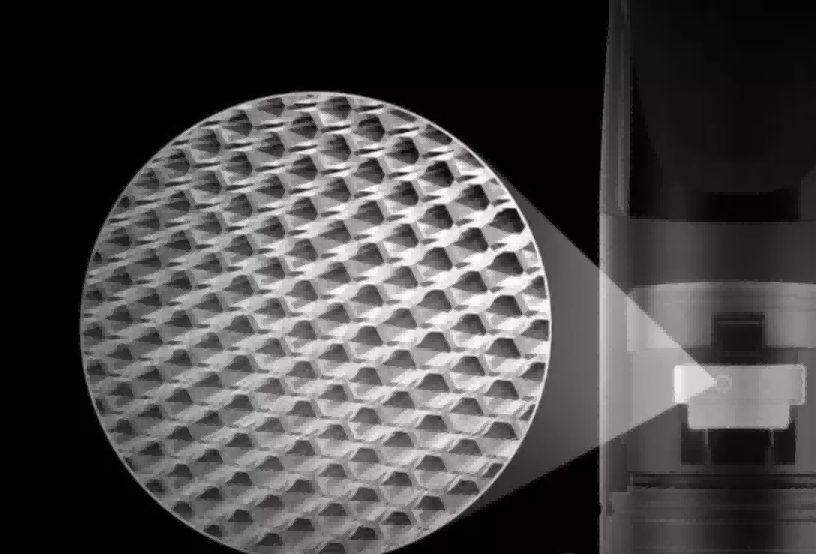
Constructed with porous ceramic structures featuring parallel honeycomb channels, these coils excel in high-temperature and corrosive conditions. Their design delivers exceptional thermal stability—capable of sustained operation at 600–800°C with minimal thermal expansion. A key advantage is their 90% thermal efficiency, achieved through far-infrared radiation that enables uniform, internal heating of target materials.

In catalytic applications like VOC treatment, honeycomb ceramic coils maintain structural integrity under thermal cycling, though wire-mesh honeycombs often outperform them in mass transfer at extreme temperatures. Their non-reactive surface ensures pure flavor in vaping by avoiding material leaching, but brittleness and higher manufacturing costs (due to precision molding requirements) limit use in high-impact settings.

Honeycomb Ceramic Coil Internal Structure and Heat Distribution

2. Mesh Coils: Efficiency for Rapid, Uniform Heating

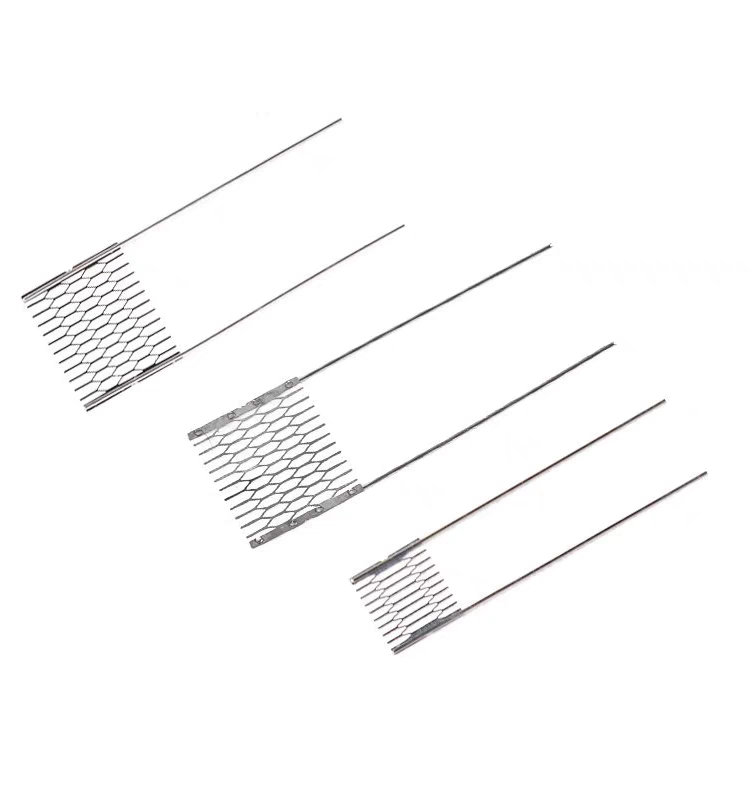
Mesh coils utilize woven metal sheets (often 904L stainless steel) to create a large, thin heating surface. This design eliminates “hot spots” common in wire coils and reduces heating time by 30–50% compared to traditional alternatives. Their low mass enables power efficiency, allowing single-battery devices to match the vapor output of dual-battery systems.

In vaping, mesh coils produce dense vapor clouds and consistent flavor, though their vapor tends to feel “drier” than wire coils. For industrial heating, simulations show that adjusting mesh density and series-parallel configurations further enhances temperature uniformity, with deviation rates below 2.4%. While more durable than wire coils, their metal composition makes them susceptible to corrosion in chemical environments.

Mesh Coil Heating Surface and Vapor Production Dynamics

3. Comparative Analysis & Application Guidance

Performance Metric Honeycomb Ceramic Mesh Traditional Wire-Wound
Thermal Efficiency ~90% ~85% ~75%
Lifespan Longest (resists burning) Medium (2x wire lifespan) Shortest (hot spot damage)
Cost High Medium Low
Best For High-temp industrial heating, pure flavor vaping Cloud-chasing vaping, rapid heating systems Low-cost, low-power consumer devices

The choice hinges on priority needs: honeycomb ceramic for thermal stability and purity, mesh for efficiency and rapid response, and wire-wound for cost-sensitive applications. By aligning coil technology with operational demands, users optimize performance while controlling lifecycle costs.

E-cig Mfrs: How to Navigate Evolving Global E-cig Regulations

The global e-cigarette landscape is shifting faster than ever, with regulations evolving at a pace that challenges even the most agile industry players. From the EU’s Tobacco Products Directive (TPD) revisions to the U.S. FDA’s ever-tightening rules on premarket authorizations, and emerging restrictions in Asian and African markets, the patchwork of requirements has become a critical hurdle for E-cig Mfrs aiming to scale or even maintain market presence.

Navigating this complexity isn’t just about avoiding penalties—it’s about seizing opportunities. Markets with clear, stable regulations often reward compliant brands with consumer trust and loyalty. For E-cig Mfrs, the key lies in adopting a proactive, strategic approach rather than reacting to each new rule as it emerges.

Global e-cigarette regulatory map

🔍1. Build a Real-Time Regulatory Monitoring System

Regulations rarely change overnight, but they do evolve through public consultations, draft proposals, and parliamentary debates. E-cig Mfrs must invest in tools or partnerships that track these developments across target markets. Subscribing to specialized legal newsletters, joining industry alliances like the Global Vaping Association, or hiring regional regulatory experts can provide early warnings—critical for adjusting product lines or marketing strategies before new rules take effect.

For example, when Brazil announced plans to ban flavored e-cigarettes in 2024, manufacturers with advance notice shifted production to tobacco-only variants, avoiding costly inventory surpluses.

🛠️2. Prioritize Compliance in Product Design

Gone are the days of one-size-fits-all products. Today’s regulations target specifics: nicotine concentration (capped at 20mg/ml in the EU), tank size (maximum 2ml in many regions), child-resistant packaging, and even ingredient transparency. E-cig Mfrs should design products with modularity in mind—allowing quick adjustments to meet regional standards without overhauling entire production lines.

Compliant e-cigarette packaging with regulatory labels

Investing in lab testing early—for toxicology, emissions, and ingredient safety—also streamlines approval processes. Markets like Canada and Australia require rigorous premarket data, so having this documentation ready can cut time-to-market by months.

🤝3. Cultivate Regional Partnerships

Local knowledge is irreplaceable. E-cig Mfrs expanding into new regions should partner with legal firms, distributors, or trade associations with on-the-ground expertise. These partners can decode nuanced rules—like China’s 2022 ban on online sales, which included loopholes for certain retail channels—and guide compliance with local customs (e.g., language requirements for labeling in the Middle East).

💬4. Engage in Policy Dialogue

Regulators often lack firsthand insight into industry operations. E-cig Mfrs that participate in public consultations or share data on product safety (e.g., reduced-harm potential compared to traditional cigarettes) can help shape balanced regulations. This proactive engagement not only mitigates overly restrictive rules but also positions brands as responsible stakeholders—enhancing reputational value.

In summary, navigating global e-cig regulations demands vigilance, flexibility, and collaboration. For E-cig Mfrs, compliance isn’t a burden but a strategic advantage—one that protects against risks while opening doors to growing markets. By monitoring trends, designing for adaptability, leveraging local expertise, and engaging with policymakers, manufacturers can turn regulatory challenges into opportunities for sustainable growth.

Private model design + Function integration: Creating complex customized solutions for top clients

Top clients across finance, manufacturing, and enterprise services reject one-size-fits-all tech solutions. They face complex scenarios, strict data security rules, and demand scalable systems. To address this, Private model design and Function integration deliver custom solutions that align tech with their goals.

❖ Top Clients’ Unique Needs ❖

To craft fitting solutions, we first unpack top clients’ unique pain points—two key challenges standard tools can’t solve.

First, their core processes (e.g., financial risk assessments, manufacturing optimization) need models tailored to their data and operations. Generic models lack flexibility, causing poor performance or compliance risks.

Compounding this, their tech stacks (ERP, CRM, analytics) are fragmented, with disconnected vendor systems. Put simply, off-the-shelf tools fail here—making Private model design essential: we build models from scratch to match their rules, not the other way around.

❖ Design to Integration: Client-Centric Roadmap ❖

We deliver custom solutions via a structured process: starting with Private model design, ending with seamless Function integration.

Kicking off, we map client needs with stakeholders: identifying pain points (e.g., slow logistics data) and goals (e.g., new markets). With these insights, we build modular private models.

For example, a top e-commerce client needed a churn-prediction model—we integrated their transaction, browsing, and support data into a modular design.

Once the model is final, we weave it into their tech ecosystem via API gateways and microservices, avoiding disruptions. For the e-commerce client, this meant linking the churn model to their CRM (retention emails) and inventory tool (demand adjustments).

Importantly, we test rigorously (load checks, user trials) to ensure smooth peak-hour performance. This mix sets our solutions apart.

Private Model & Function Integration Workflow
Figure 1: Implementation Workflow for Top Clients

❖ Value of Private Model + Integration ❖

For top clients, Private model design and Function integration boost profits and competitiveness. Here’s how:

First, data security: we deploy private models on their cloud/servers, keeping sensitive data (e.g., proprietary formulas) in their ecosystem—critical for healthcare/finance compliance.

Second, efficiency: Function integration eliminates manual data transfers, cutting errors and saving hours. A healthcare client saw 30% fewer admin tasks after linking their patient-risk model to EHRs.

Third, scalability: as clients grow, we update models (e.g., global variables) or integrate new tools (e.g., supply chain software) without rebuilding—keeping them agile.

❖ Case: Global Bank Empowerment ❖

A leading global bank needed personalized wealth advice for high-net-worth clients—while complying with 15+ regional rules. Standard models failed: they couldn’t match client segments (sustainable vs. legacy investors) or local tax rules.

To solve this, we used Private model design and Function integration: we built a wealth model with their client data, risk frameworks, and regulations, then integrated it with their CRM and transaction platform for one-click execution.

Results: 22% higher client retention, 18% more assets under management, zero violations—proof of tailored value.

Global Bank Metrics Before & After
Figure 2: Bank Performance Post-Implementation

In short, Private model design and Function integration are must-haves for top clients. We focus on their needs, build strategy-aligned models, and integrate seamlessly—turning tech expertise into real business value.

After-sales and Technical Support: How to keep supporting partners after product launch?

🔧 1. Dedicated Teams: The Backbone of After-sales and Technical Support

For vape partners, post-launch issues—such as sudden battery drain in Disposable VAPE units—can disrupt daily operations.

Critically, After-sales and Technical Support is not an afterthought; it is the foundation of long-term trust between you and your partners.

A dedicated support team combines deep e-cig expertise (e.g., atomizer mechanics, battery safety) and partner-focused communication to tailor solutions to each partner’s needs.

Whether the partner is a small boutique retailer or a large national distributor, this team understands their business model—preventing minor issues from escalating into lost sales.

Vape After-sales and Technical Support Team Collaborating

⚠️ WARNING: This product contains nicotine. Nicotine is an addictive chemical. Sales to minors are prohibited.

📞 2. Real-Time Response: Non-Negotiable for After-sales and Technical Support

Partners cannot afford to wait 24 hours when Refillable Pod Kit devices fail to connect to their sales apps.

Every hour of downtime directly translates to lost revenue and frustrated end-users.

To address this urgency, effective After-sales and Technical Support requires a multi-channel framework: an emergency hotline for safety risks, a dedicated ticketing system for standard queries (e.g., technical manual requests), and in-app chat for quick troubleshooting.

Clear service level agreements (SLAs) ensure consistency: 1-hour responses for critical issues and 4-hour resolutions for software problems.

For example, a European partner recently faced a surge in “no vapor” complaints from retailers. Our support team responded within 45 minutes with a step-by-step fix for airflow blockages, turning a potential crisis into a trust-building moment.

📚 3. Resource Empowerment: Strengthening After-sales and Technical Support

While real-time support solves immediate problems, empowering partners to handle minor issues independently reduces repeat queries.

This also strengthens long-term After-sales and Technical Support.

Pre-launch training often overlooks real-world scenarios, so monthly targeted webinars address these gaps. These webinars cover practical topics like “Troubleshooting Vape Batteries in Humid Climates” or “FDA Compliance for Firmware Updates.”

Recordings, updated technical manuals, and short video tutorials (e.g., “How to Replace a Faulty Atomizer”) are stored in a password-protected partner portal.

The portal is updated weekly based on partner questions—for instance, adding a “Shipping Resilience Guide” if multiple partners inquire about charging port durability during shipping. This frees your team to focus on complex tasks.

Vape Partners Accessing After-sales and Technical Support Resources
🔍 4. Proactive Monitoring: Elevating After-sales and Technical Support

Moving beyond reactive fixes, proactive monitoring elevates After-sales and Technical Support from a “problem-solver” to a “strategic partner.”

Instead of waiting for partners to report issues, use IoT-enabled tools to track vape product performance in real time.

Focus on key metrics: battery life consistency, Bluetooth connection stability, and software crash rates.

If data reveals a 20% spike in app crashes for devices sold in Southeast Asia, immediately alert your support team and affected partners.

Share a temporary workaround (e.g., manual app reset) to minimize disruption.

Recently, our team detected a potential overheating risk in a specific vape model before any partners reported it. We notified all relevant distributors within 2 hours and shipped replacement parts within 48 hours—successfully avoiding product recalls.

💬 5. Feedback Loops: Refining After-sales and Technical Support

Even the strongest After-sales and Technical Support systems need continuous refinement.

Feedback loops are the most effective way to achieve this.

Immediately after resolving a partner’s issue, send a short, focused survey to gather targeted input: “Did our solution fully meet your business needs?” “How would you rate the response time?”

Compile this feedback monthly and share it with your support and product teams.

For example, if 80% of partners report struggling to navigate the FAQ section, prioritize redesigning the portal’s search function to improve accessibility.

Beyond monthly surveys, hold quarterly review meetings with key partners. If a partner plans to expand into Latin America, adjust your support by adding Spanish-language technical documents or training their local team on regional e-cig regulations. This ensures support evolves with their business.

🚀 6. Growth Alignment: After-sales and Technical Support as a Driver

To turn After-sales and Technical Support from a “cost center” to a “growth enabler,” align it directly with your partners’ long-term success.

For partners entering new markets—an exciting but challenging step—offer localized support tailored to regional needs.

This includes translating technical documents into the local language and training their team on regional regulatory requirements (e.g., EU TPD 3 or China’s latest e-cig standards).

It also means connecting them with trusted local repair vendors to speed up hardware replacements.

For high-performing partners, provide exclusive benefits like early access to beta versions of new vape products.

One partner leveraged this to launch a Japan-specific vape model 6 weeks ahead of competitors, boosting their local market share by 15%—clear proof of support-driven growth.

🌟 Conclusion: After-sales and Technical Support – The Vape Differentiator

In the vape industry, product quality and basic reliability are now table stakes.

Against this backdrop, After-sales and Technical Support has become the key differentiator between average and exceptional partnerships.

By combining a dedicated team, real-time responsiveness, proactive monitoring, and growth-aligned care—tied to Disposable VAPE and Refillable Pod Kit lines—you do more than retain partners.

You turn them into vocal brand advocates.

Every resolved issue, updated resource, and proactive alert builds incremental trust.

Ultimately, this trust drives repeat business, positive referrals, and long-term collaboration. It proves that sustainable support is not just about “fixing problems after launch,” but growing with your partners every step of the way.

Ready to elevate your Vape partner support?

Visit Vape-Sky Official Website

Electronic Cigarette Private Mold Design: A Guide to Managing Costs, Scheduling Timelines & Avoiding Key Risks

In the highly competitive electronic cigarette (e-cig) market, private mold design has become a critical strategy for brands to differentiate products, enhance user experience, and build brand loyalty. However, private mold development is often accompanied by challenges such as soaring costs, delayed timelines, and unforeseen risks. This guide breaks down actionable strategies to manage costs, optimize timelines, and mitigate key risks, helping e-cig brands navigate the private mold design process successfully.

Cost Management: Balance Quality and Affordability

Cost overruns are one of the most common pitfalls in e-cig private mold design. To avoid this, brands must adopt a proactive cost-control approach from the initial design phase—starting with material selection and mold structure optimization.

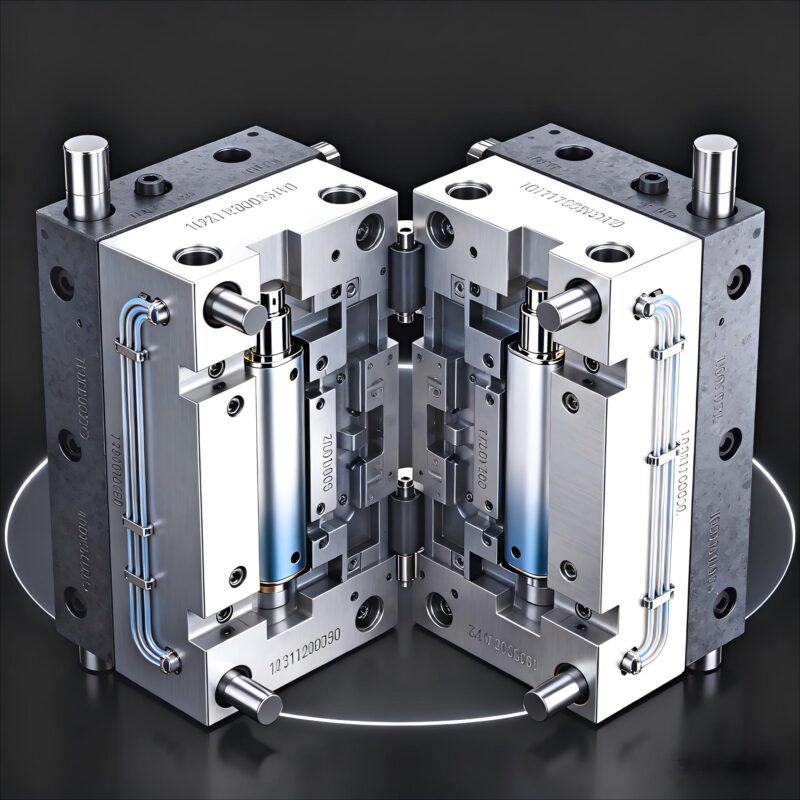
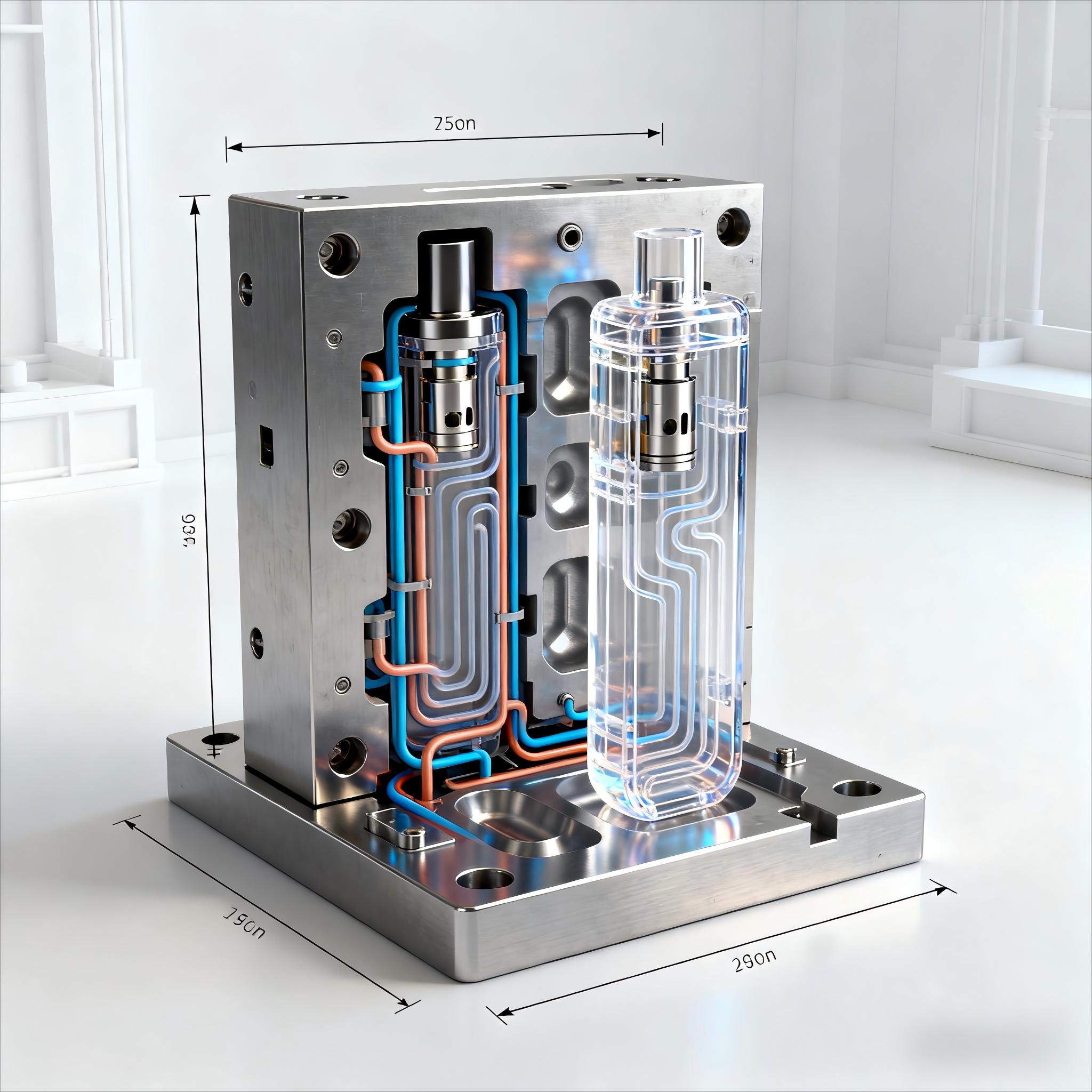
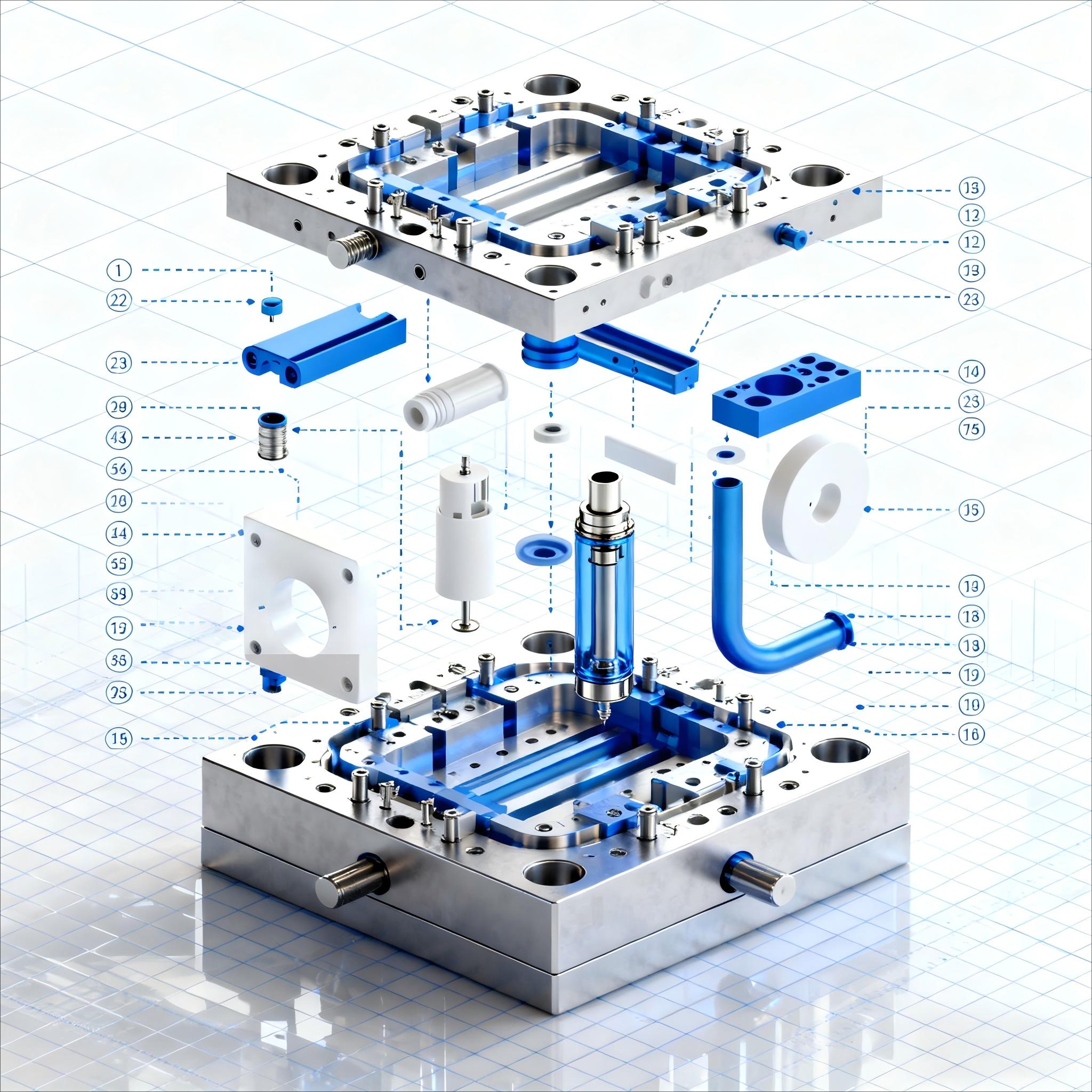
E-cig Private Mold Materials and Components

Figure 1: Common materials for e-cig private molds (left: FDA-approved ABS blends; right: mold steel components)

1.1 Material Selection: Prioritize Cost-Efficiency Without Compromising Compliance

E-cig molds require materials that meet food-grade and heat-resistant standards (e.g., FDA-approved plastics for mouthpieces). While high-end materials like medical-grade PC (polycarbonate) offer durability, they can increase mold costs by 15-20%. Instead, brands can opt for cost-effective alternatives such as ABS (acrylonitrile butadiene styrene) blends, which meet safety standards and reduce material costs by 8-12%. Additionally, working with suppliers to bulk-purchase raw materials can lower per-unit costs by 5-7%.

1.2 Mold Complexity: Optimize Design for Production Efficiency

Overly complex designs (e.g., intricate airflow channels, custom-shaped casings) increase mold manufacturing time and cost. For example, a mold with 4 cavities (for mass production) costs 30% more than a 2-cavity mold, but boosts production efficiency by 60%. Brands should balance design uniqueness with manufacturability: simplify non-critical features (e.g., minor surface patterns) and use standard mold components (e.g., prefabricated guide pins) to cut mold costs by 10-15%.

1.3 Supplier Negotiation: Build Long-Term Partnerships

Choosing the right mold supplier is pivotal for cost control. Avoid selecting suppliers solely based on low quotes—cheap molds may have poor precision, leading to costly reworks. Instead, partner with suppliers with e-cig industry experience and negotiate flexible terms: for instance, a 5% discount for long-term contracts (e.g., 2+ years) or shared tooling costs for future mold modifications. This approach can reduce overall mold costs by 8-10%.

2. Scheduling Timelines: Streamline the Development Process

Delayed mold delivery can cause missed market windows, especially in the fast-paced e-cig industry. A typical e-cig private mold project takes 8-12 weeks, but efficient timeline management can shorten this to 6-9 weeks—with clear phase division being the key.

E-cig Private Mold Development Timeline

Figure 2: Optimized timeline for e-cig private mold development (including 1-week buffer for contingencies)

2.1 Phase-by-Phase Timeline Planning

Break the project into clear phases with deadlines:

  • Design Confirmation (2-3 weeks): Finalize 3D models (using CAD software) and conduct prototype testing (e.g., airflow performance, ergonomics). Involve engineers and marketing teams early to avoid last-minute design changes.
  • Mold Manufacturing (4-6 weeks): Monitor supplier progress weekly—key steps include CNC machining (3-4 weeks) and mold testing (1-2 weeks). Use project management tools (e.g., Asana, Trello) to track milestones.
  • Mass Production Preparation (1-2 weeks): Test mold output (e.g., check for burrs, dimensional accuracy) and debug production lines. Align with assembly teams to ensure seamless transition to mass production.

2.2 Buffer Time for Contingencies

Reserve 10-15% of the total timeline for unexpected issues (e.g., design reworks, material shortages). For example, if the mold testing phase fails due to airflow leaks, a 1-week buffer allows for adjustments without delaying the entire project. Without buffer time, 60% of e-cig mold projects experience delays of 2+ weeks.

3. Avoiding Key Risks: Proactive Mitigation Strategies

E-cig private mold design faces unique risks, from regulatory non-compliance to technical failures. Proactive risk management is essential to protect investments.

3.1 Regulatory Risks: Align with Market Standards

E-cig regulations vary by region (e.g., EU’s TPD, US FDA’s PMTA). A mold designed for the EU market may not comply with US size restrictions (e.g., minimum tank capacity), leading to mold obsolescence. To mitigate this, research target market regulations before design: for example, ensure mold dimensions meet FDA’s 2ml maximum e-liquid capacity rule. Conduct third-party compliance testing (e.g., RoHS for material safety) to avoid costly redesigns.

3.2 Technical Risks: Validate Designs Early

Design flaws (e.g., weak structural points, poor heat dissipation) can cause mold damage or product recalls. Use 3D printing to create prototypes and test for durability (e.g., drop tests, heat resistance). For example, a prototype with a faulty battery compartment can be revised before mold manufacturing, saving $5,000-$10,000 in rework costs. Additionally, conduct mold trial runs with small batches (50-100 units) to identify issues before mass production.

3.3 Supply Chain Risks: Diversify Suppliers

Overreliance on a single supplier can lead to delays if they face capacity issues (e.g., labor shortages, equipment breakdowns). Maintain 2-3 alternative suppliers for critical components (e.g., mold steel, plastic resins) and sign backup agreements. For example, if a primary supplier’s CNC machines fail, a backup supplier can take over within 3 days, minimizing timeline disruptions.

Conclusion

E-cig private mold design requires a balance of cost control, timeline efficiency, and risk mitigation. By optimizing material selection, streamlining project phases, and proactively addressing regulatory and technical risks, brands can develop high-quality private molds that meet market demands while protecting their bottom line. Remember: successful mold design is not just about creating a unique product—it’s about managing the entire process to deliver value efficiently.

Detailed Overview of the Entire E-Cigarette OEM Cooperation Process: Every Step from Inquiry to Delivery

Refillable Pod Kit 3
Electronic Cigarette OEM Cooperation Process

In the fast-paced electronic cigarette industry, E-Cigarette OEM has become a core solution for brands. It helps them cut costs, skip R&D barriers, and launch products quickly. The entire process needs close coordination between clients and factories. Below is a detailed breakdown—from initial communication to final delivery.

Step 1: Initial Inquiry & Requirement Confirmation

Initially, the process starts when the client sends an inquiry. This inquiry lays the groundwork for successful E-Cigarette OEM cooperation.

To let the OEM factory assess feasibility and quote accurately, clients must provide clear, specific requirements. These include product specs (e.g., pod system, battery capacity), customization needs (logo placement, colors), and order scale (trial 500–2,000 units, bulk estimates).

The factory responds within 1–3 working days. It provides a detailed quote (material, labor, customization costs), a preliminary timeline, and clarifies unclear requirements.

Step 2: Sample Development & Approval

Once the client confirms the quote and basic terms, the process moves to sample development. This step is critical for E-Cigarette OEM projects—it checks if the product matches expectations.

First, engineers design a 3D model or prototype, focusing on structural safety (e.g., leak-proof design) and user experience (e.g., mouthpiece comfort).

Then, the factory produces 5–20 samples with mass-production materials. For brands prioritizing aesthetics, samples often match the style of modern-design vape products.

Finally, the client tests samples (performance, appearance, compliance) and approves them formally (in writing/email).

Sample Development Workshop

Sample Development Workshop: Engineers test prototypes for OEM projects.

Step 3: Contract Signing & Deposit Payment

After sample approval, both parties sign a legally binding contract outlining E-Cigarette OEM terms clearly.

The contract includes product details (approved specs, ISO 9001 standards), commercial terms (30% deposit upfront, 70% before shipment), and liability clauses (delay penalties, refunds for defects).

Once signed, the client pays the 30% deposit—funds the factory uses to buy materials and reserve production capacity.

Step 4: Mass Production

This phase turns the approved sample into large-scale production (15–30 days, based on quantity) and is a core step in E-Cigarette OEM.

First, the factory sources certified materials (high-quality batteries, food-grade e-liquid) and inspects them to avoid substandard items.

Workers calibrate equipment (injection molding machines, assembly lines) to match sample specs.

Inspectors check products at every stage (e.g., e-liquid filling accuracy ±0.1ml) to prevent defects.

Automated Production Line

Automated Production Line: Ensures efficient manufacturing for OEM orders.

Step 5: Final Quality Audit & Packaging

Before shipping, the factory does a 100% final quality audit (FQA) to verify products meet standards.

Inspectors test performance (puff count, battery life), appearance (no scratches, aligned logos), and compliance (nicotine content reports).

For products competing with modern-design options, appearance checks are critical—visual quality affects consumer choices.

After FQA, products are packaged as requested (blister packs, branded cartons) with protective materials (bubble wrap).

Step 6: Shipping & Balance Payment

The factory coordinates with logistics (DHL for small batches, sea freight for bulk) based on the client’s shipping method and destination.

Before dispatch, the client pays the 70% balance. The factory then sends a shipping confirmation with a tracking number.

For international E-Cigarette OEM orders, the factory prepares documents (invoice, customs certificates) to avoid delays.

Step 7: Post-Delivery Support

Cooperation continues after delivery. The factory offers post-delivery support for E-Cigarette OEM clients.

If defects occur (e.g., battery issues), the factory replaces products or refunds per the contract.

Feedback on performance and market response is used to optimize future orders (e.g., flavor adjustments).

Long-term partnerships often involve sharing trends (e.g., new nicotine salts) to keep clients competitive in the E-Cigarette OEM space.

Conclusion

Ultimately, the E-Cigarette OEM process relies on clear communication, strict quality control, and timely coordination.

Choosing a reputable OEM factory (certified, mature lines, strong after-sales) ensures a smooth partnership and products that meet customer needs and regulations.

By following these steps, brands can streamline their E-Cigarette OEM journey and launch quality products efficiently.

E-cigarette manufacturing factory: How to Meet Demands from Small-Batch Trial to Million-Scale Production

E-cigarette Manufacturing: How to Meet Demands

E-cigarette manufacturing has become a dynamic sector, with brands often starting with small-batch trials to test market responses before scaling to million-scale production. This transition requires careful planning to balance flexibility, efficiency, and quality—three pillars that define success in the competitive E-cigarette industry.

Understanding Demand Differences: Small-Batch vs. Large-Scale

Small-batch trial production typically serves two core goals: product iteration and market validation. Manufacturers may produce 500 to 5,000 units to test new designs (e.g., compact pod systems) or flavor profiles, relying on quick adjustments to refine prototypes. In this phase, demand is characterized by unpredictability—changes in specifications (such as battery capacity or e-liquid viscosity) are common, and production lines must adapt rapidly.

In contrast, million-scale production caters to mass-market demand, where consistency and cost-efficiency take priority. Brands need to deliver uniform E-cigarette units to avoid recalls and maintain consumer trust, while also optimizing per-unit costs to compete in global markets. Here, demand is stable but high-volume, requiring production lines to operate at near-maximum capacity with minimal downtime.

Strategies for Small-Batch Trial Production

To meet small-batch demands, manufacturers should invest in modular production setups. Unlike fixed assembly lines, modular systems allow for easy reconfiguration—for example, switching from assembling disposable E-cigarettes to rechargeable pods in a matter of hours. This flexibility reduces setup time and lowers the cost of testing multiple prototypes.

Rapid feedback loops are also critical. After producing a small batch, manufacturers should partner with focus groups or regional distributors to collect data on usability and performance. For instance, if a trial batch of E-cigarettes reports frequent leaks, engineers can adjust the cartridge seal design and produce a new batch within days. This iterative process ensures that only refined products move to large-scale production.

Additionally, small-batch production benefits from lean inventory management. Sourcing small quantities of raw materials (e.g., lithium-ion batteries, food-grade e-liquid ingredients) prevents overstocking, while working with local suppliers reduces lead times for last-minute material adjustments.

Small-Batch E-Cigarette Production Line
A modular small-batch production line for E-cigarettes, showing technicians adjusting prototype assembly stations to test new pod designs.

Scaling to Million-Scale Production: Key Considerations

Scaling to million-scale E-cigarette production requires a shift from flexibility to standardization, starting with automation. Automated assembly lines—equipped with robotic arms for precise tasks like cartridge filling and component soldering—can boost throughput from 1,000 units per day (small-batch) to 50,000+ units per day. Automation also reduces human error, a critical factor for meeting strict regulatory standards (e.g., the EU’s Tobacco Products Directive or U.S. FDA guidelines) that govern E-cigarette safety.

Supply chain resilience is another must. For large-scale production, manufacturers need to secure long-term contracts with global suppliers to ensure a steady flow of raw materials. This includes diversifying supplier networks to mitigate risks like material shortages or geopolitical disruptions. For example, a manufacturer might source batteries from both Chinese and Korean suppliers to avoid production halts if one region faces delays.

Capacity planning is equally important. Before scaling, manufacturers should conduct a thorough demand forecast to determine the number of production lines needed. Building redundant lines (e.g., two parallel lines each capable of producing 3 million units monthly) provides a safety net for sudden demand surges or equipment failures.

Automated Million-Scale E-Cigarette Manufacturing Facility
An automated production floor for million-scale E-cigarette production, with robotic arms handling cartridge filling and machine vision systems inspecting final units.

Maintaining Quality Across All Production Scales

Quality control (QC) is non-negotiable at every stage of E-cigarette manufacturing. In small-batch trials, QC teams focus on validating product safety—testing for e-liquid contaminants (e.g., heavy metals) and ensuring battery safety. For large-scale production, real-time QC systems (such as machine vision cameras) inspect 100% of units for defects (e.g., misaligned components or faulty sensors) at high speed.

Regulatory compliance also ties into quality. Manufacturers must document every step of production, from raw material sourcing to final packaging, to meet regional reporting requirements. This documentation not only avoids fines but also builds transparency with consumers, who increasingly prioritize safe, compliant E-cigarette products.

Leveraging Digital Tools for Seamless Transition

Digital technologies bridge the gap between small-batch and large-scale production. Enterprise Resource Planning (ERP) software, for example, tracks inventory, production schedules, and QC data across both phases. In small-batch trials, ERP tools help manage small-quantity material orders; in large-scale production, they optimize scheduling to minimize waste and maximize line efficiency.

Internet of Things (IoT) sensors further enhance visibility. Installed on production lines, these sensors monitor equipment performance in real time, predicting maintenance needs to prevent unexpected downtime. For million-scale operations, this proactive approach ensures that production stays on track to meet high-volume demands.

Conclusion

The journey from small-batch trial to million-scale E-cigarette production is a strategic process that demands adaptability, investment in technology, and a relentless focus on quality. By embracing modular systems for small batches, automation for large-scale output, and digital tools to streamline the transition, manufacturers can meet evolving market demands while maintaining competitiveness. As the E-cigarette industry continues to grow, those who master this transition will be best positioned to capture opportunities in both niche and mass markets.