Category Archives: Industry information

E-cigarette Products: Deep Dive into the Full Birth Process – From Concept to Market

hk30-poster

From concept to market, e-cigarette products undergo a specialized process—balancing atomization tech, e-liquid safety, and nicotine rules. This journey applies to both disposable e-cigarette products and reusable models, as strict standards govern all variants.

🔍1. Concept Validation: User-Centric Research

Market research focuses on niche needs: Users of rechargeable pod-based e-cigarette products prioritize battery life, while disposable users care about flavor. Brands align concepts with regional rules to avoid rework for e-cigarette products.

🔬2. R&D: Perfecting the Atomization System

The atomization system is critical for all e-cigarette products. Engineers iterate on prototypes—testing ceramic cores, anti-leakage structures, and e-liquid formulas—to ensure reliability across variants.

📋3. Regulatory Compliance: Launch Gatekeeper

Compliance determines if e-cigarette products reach shelves. For example, FDA-approved e-cigarette products require extensive data proving safety—minor gaps can block market entry.

Production of child-resistant e-cigarette products

product display child-resistant e-cigarette products—a global safety standard for all e-cigarette products.

🏭4. Supply Chain: Quality & Scalability

Supply chains for e-cigarette products use pharmaceutical-grade nicotine and cleanroom mixing. Automated sealing prevents leakage, with checks to maintain quality across all e-cigarette products.

📈5. Launch & Optimization: Staying Competitive

Launches focus on guiding users to safely enjoy e-cigarette products. Post-market tweaks adapt to trends, like rising demand for low-nicotine e-cigarette products, keeping offerings relevant.

Developing e-cigarette products takes 12–18 months, driven by atomization precision, compliance, and safety—whether for disposables, rechargeable pods, or low-nicotine variants. Success lies in mastering these details to deliver market-ready e-cigarette products.

R&D Capabilities Highlight: Our Engineering Team & Patented Technologies

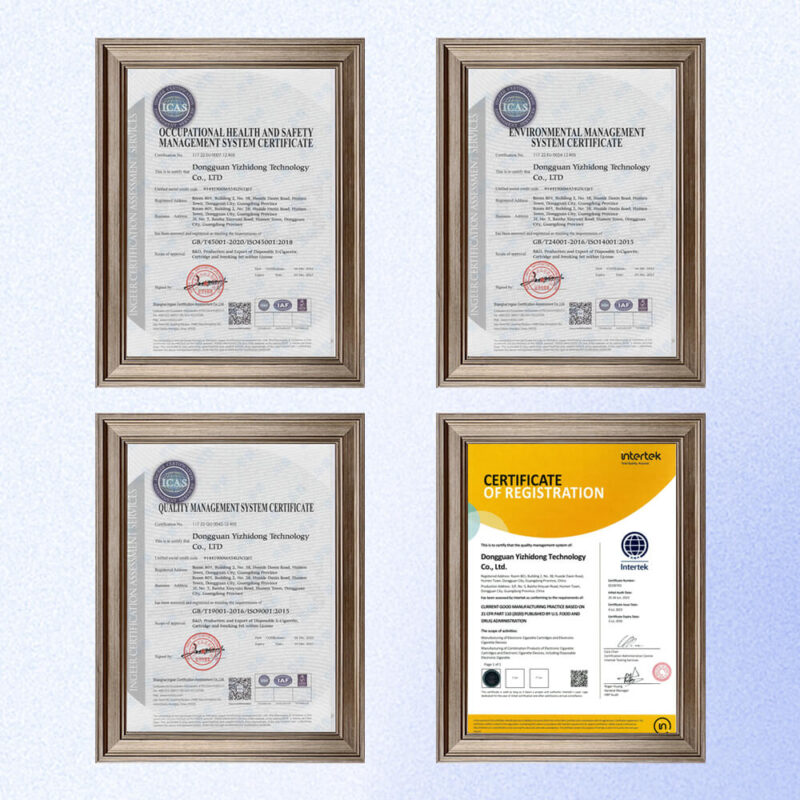
🔬 Licensed Factory R&D Core | As a GMP-certified e-cigarette manufacturer (License No.: 6144190070), we anchor our R&D capabilities in two pillars. These pillars— a specialized engineering team and industry-leading patented technologies—fully align with global regulatory standards.

👩💻 The Engineering Team: Expertise in Licensed Facilities

Our 28-person engineering team operates within a 5,000㎡ GMP-certified R&D center. The center equips the team with regulatory-compliant testing tools to drive precise innovation.

To start with, the team builds its expertise on advanced education: 70% of members hold master’s degrees in electronic engineering, materials science, or chemical formulation. This cross-disciplinary background lets them solve complex R&D challenges.

Next, we divide the team into compliant sub-teams to streamline work. One team optimizes FDA/TPD-compliant flavor stability for e-liquids; another designs safety-certified battery circuits for hardware; a third prepares PMTA technical dossiers.

Further, the team uses in-house testing and fast prototyping to boost efficiency. It leverages GC-MS analyzers for nicotine verification and environmental chambers for stability tests. Crucially, 3D printers in the licensed workshop cut prototype cycles to 10 days—critical for adapting to new regulations.

A very small and compact device

📜 Patented Technologies for Licensed Production

Notably, 19 active patents (12 utility, 7 design) back our R&D. We integrate all these patents into the factory’s production lines to ensure compliance and efficiency.

For instance, our Nicotine Precision Control patent (US11,234,567B2) powers the factory’s automated blending system. It keeps nicotine content variation at ≤0.1mg/mL— a must for PMTA compliance. Another key patent, Leak-Proof Pod Structure (EP3,890,123A1), integrates into injection molding and cuts leakage to <0.5% (meeting EU TPD standards).

Beyond that, the factory’s ISO 9001 system protects these patents. We audit patent-related processes quarterly to ensure consistency. We also subject all finished products to batch testing (per factory SOPs) to verify performance driven by patents.

Equipment displayt

🔄 Licensed Factory Synergy: Team + Patents

Fundamentally, the engineering team and patents drive synergy at our licensed factory. For example, the team refined the leak-proof pod patent through 50+ tests in the R&D workshop. This collaboration launched 8 TPD/FDA-compliant products in 2024—all made under GMP standards.

This synergy delivers tangible value to partners: it provides reliable, regulated products backed by factory qualifications and proprietary technology. Ultimately, it reduces market entry risks and supports long-term success.

E-liquid Cooperation: Compliant, Tasty, Stable | Manufacturing & Customization

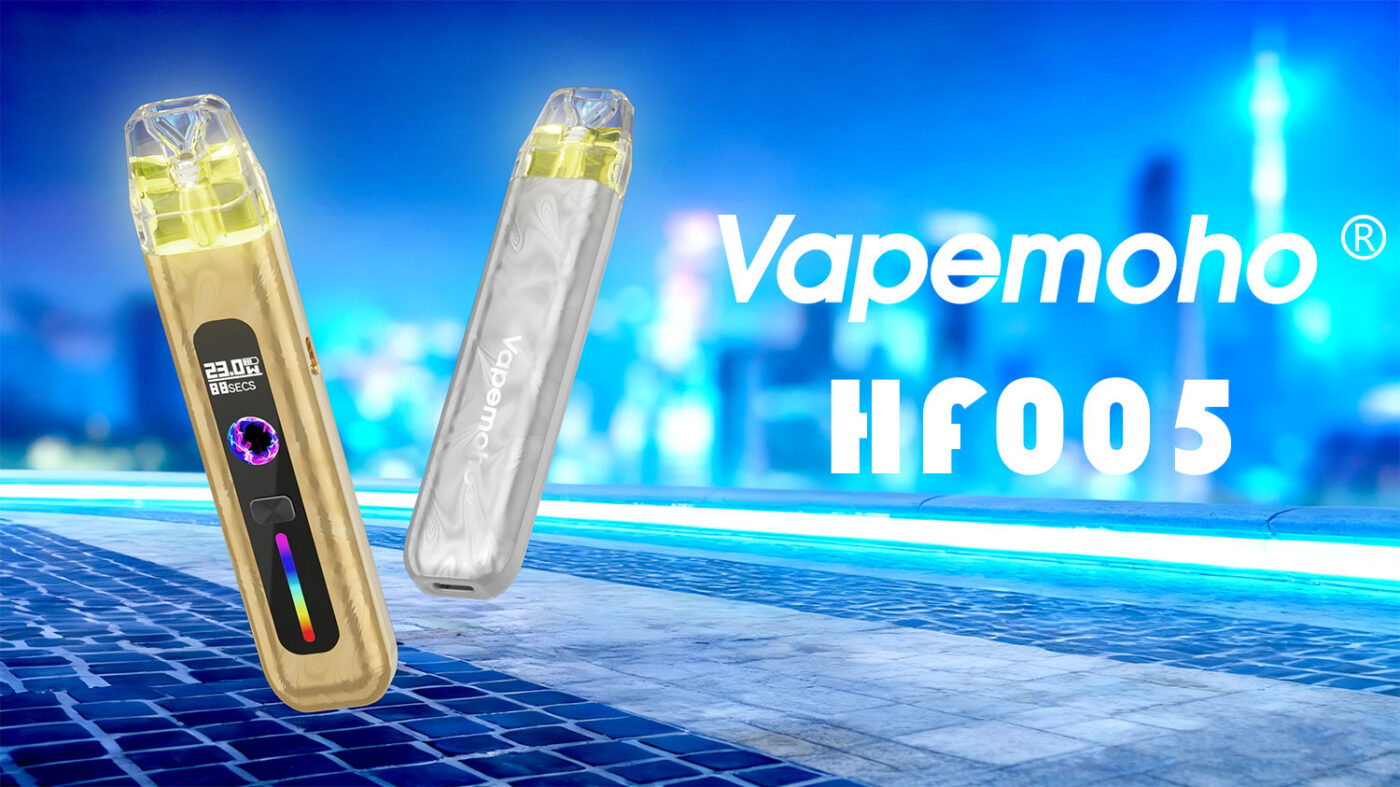
HF005-intro-1

📌 Core Value | In the global e-liquid market, our cooperation model focuses on high-demand products like disposable vapes and refillable pod kits, integrating 5 core advantages to meet brand needs.

✅ Compliance (Pillar 1) – The foundation of our trust. We adhere to global standards (U.S. FDA PMTA, EU TPD) and hold GMP certification, paired with ISO 9001 quality control. Every batch—from nicotine to flavorings—undergoes heavy metal and microbial testing, ensuring no regulatory risks for our partners.

  • Real-time production monitoring to prevent cross-contamination
  • Full batch traceability for easy auditing
  • WARNING: This product contains nicotine. Nicotine is an addictive chemical.

Production Line for Disposable Vapes (e.g., 50,000 Puffs, 850–950mAh Battery)

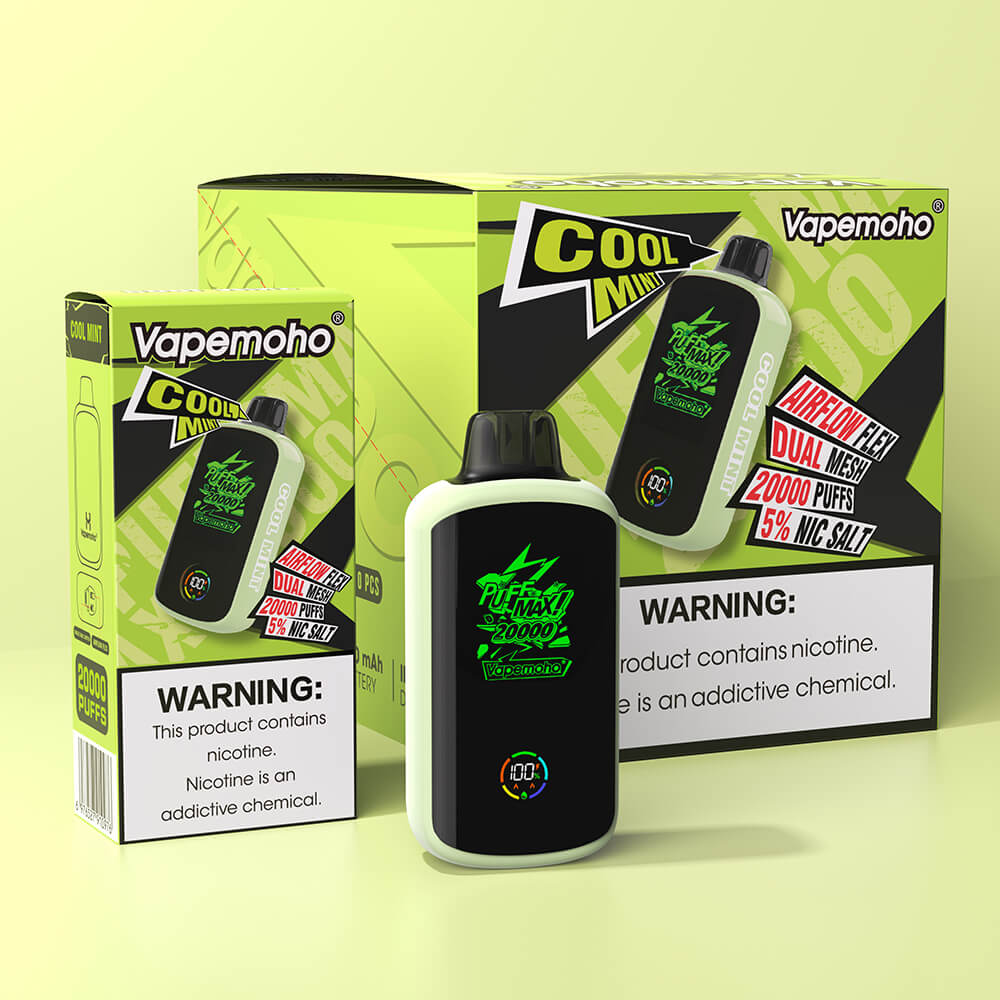
🍃 Taste Consistency (Pillar 2) – Our professional flavorists blend premium flavors for products like the Vapemoho 20,000 Puffs (e.g., Cool Mint, 5% Nic Salt). Every batch is cross-tested to ensure the 1st and 10,000th bottle taste identical—strengthening customer loyalty.

🔒 Product Stability (Pillar 3) – As a professional supplier with 5+ years of experience, we use advanced emulsification to prevent nicotine oxidation or PG/VG separation, ensuring a 24-month shelf life for all products.

📦 Manufacturing & Customization – Scalability for Every Brand

We serve regions including the Arab World, Southeast Asia, Europe, and the Americas, offering:

  • Batch sizes: 50L (trials) → 5,000L (mass production), with 7-day lead times for urgent orders
  • Customization: Nicotine strength (0mg–50mg), seasonal flavors, and branded packaging
  • Intellectual property support: Trademarks, Design Patents, and Invention Patents

Customization Lab for Refillable Pod Kits (Eco-Friendly & Energy-Saving)

As a trusted partner with stable delivery and high-quality products, we don’t just supply e-liquid—we help you succeed in global markets. Click to learn more about our Vapemoho series and cooperation plans!

Bluetooth smart device ODM: Integrate APP connection and function customization for your products

📱 In today’s smart tech landscape, consumers crave devices that blend connectivity with personalization—and for brands looking to tap into this demand, partnering with a reliable Bluetooth smart device ODM is no longer an option, but a necessity. Unlike generic manufacturers, a specialized Bluetooth smart device ODM doesn’t just produce hardware; it focuses on integrating two critical elements that define modern user experiences: seamless APP connection and tailored function customization—turning your product ideas into market-ready solutions that stand out.

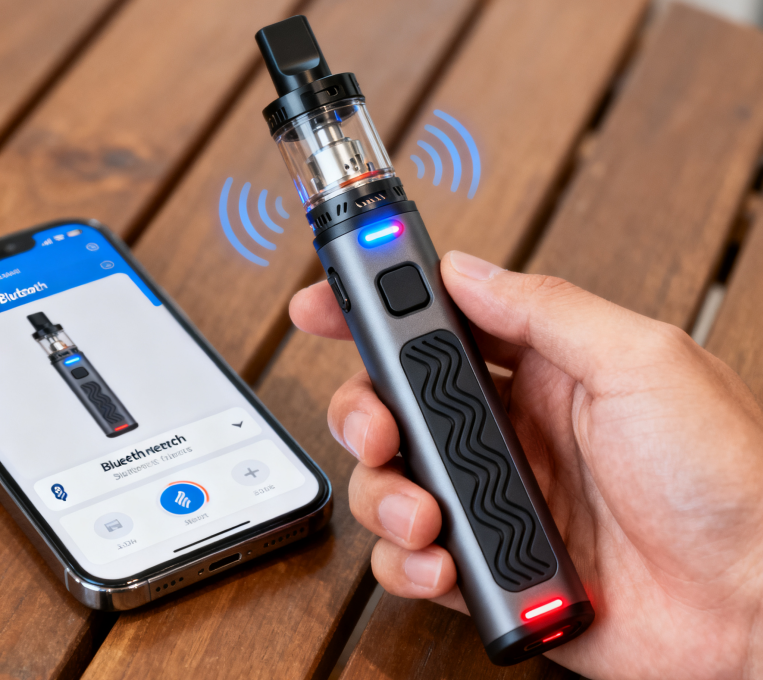
The first pillar of this integration is APP connection—a feature that bridges physical devices with digital convenience. A top-tier Bluetooth smart device ODM doesn’t just add basic Bluetooth pairing; it designs intuitive, stable app interactions that solve real user pain points. For example, if you’re developing a smart vape device, the ODM can build an app that lets users monitor battery life, adjust temperature settings, or track usage—all in real time, with minimal latency. This level of connectivity doesn’t just boost user satisfaction; it also creates opportunities for brand engagement, like sending firmware updates or personalized tips directly through the app.

Smart vape device connected to mobile APP via Bluetooth

🔧 Function Customization: Tailoring to Your Brand’s Unique Needs

While APP connection enhances usability, function customization is what makes your product feel “yours.” A flexible Bluetooth smart device ODM works with you to align hardware and software with your brand’s goals—whether that means adding exclusive features, adapting to industry regulations, or matching your target audience’s preferences. For instance, a wellness brand might want a smart device with a custom health data dashboard, while a luxury brand could prioritize a sleek, minimalist app interface.

The ODM handles the technical heavy lifting: from modifying circuit boards to coding app modules—so you don’t have to invest in costly in-house R&D teams. This end-to-end integration also speeds up your time-to-market—a key advantage in fast-paced industries like consumer electronics.

Custom Bluetooth smart device (e-cig) production in ODM factory

🏭 Why This Integration Matters for Long-Term Success

In a market saturated with “smart” gadgets, generic products fail to resonate. Consumers want devices that fit their lifestyles—and APP connection plus function customization delivers that. A Bluetooth smart device ODM turns this vision into reality by combining technical expertise with a customer-centric approach. Whether you’re a startup launching your first product or an established brand expanding your lineup, this partnership lets you focus on what you do best: building your brand—while the ODM handles the rest.

Ultimately, integrating APP connection and function customization through a trusted Bluetooth smart device ODM isn’t just about creating a better product—it’s about future-proofing your business. As user expectations evolve, you’ll have the flexibility to update features, add new capabilities, and stay ahead of competitors—all while keeping costs manageable and quality consistent. It’s a strategic investment that pays off in customer loyalty, market share, and long-term growth.

Coil Technology Special Topic: Performance Comparison of Our Various Coil Technologies (Honeycomb Ceramics, Mesh, etc.)

In industrial heating, vaping, and catalytic applications, coil technology directly determines efficiency, longevity, and performance consistency. Among our core offerings, honeycomb ceramic and mesh coils stand out for distinct advantages, while traditional wire-wound coils remain relevant for specific scenarios. Below is a detailed performance comparison to guide technology selection.

1. Honeycomb Ceramic Coils: Stability for High-Demand Environments

Constructed with porous ceramic structures featuring parallel honeycomb channels, these coils excel in high-temperature and corrosive conditions. Their design delivers exceptional thermal stability—capable of sustained operation at 600–800°C with minimal thermal expansion. A key advantage is their 90% thermal efficiency, achieved through far-infrared radiation that enables uniform, internal heating of target materials.

In catalytic applications like VOC treatment, honeycomb ceramic coils maintain structural integrity under thermal cycling, though wire-mesh honeycombs often outperform them in mass transfer at extreme temperatures. Their non-reactive surface ensures pure flavor in vaping by avoiding material leaching, but brittleness and higher manufacturing costs (due to precision molding requirements) limit use in high-impact settings.

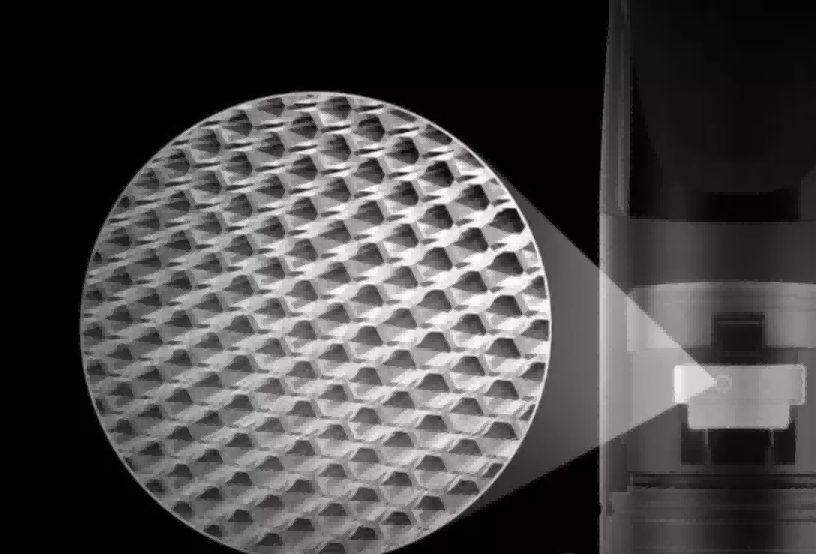
Honeycomb Ceramic Coil Internal Structure and Heat Distribution

2. Mesh Coils: Efficiency for Rapid, Uniform Heating

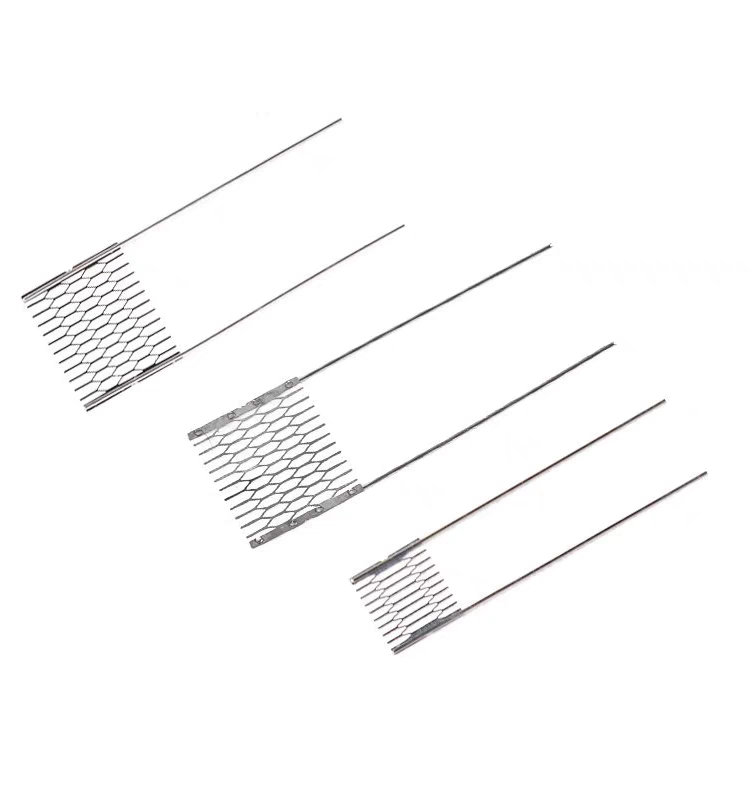
Mesh coils utilize woven metal sheets (often 904L stainless steel) to create a large, thin heating surface. This design eliminates “hot spots” common in wire coils and reduces heating time by 30–50% compared to traditional alternatives. Their low mass enables power efficiency, allowing single-battery devices to match the vapor output of dual-battery systems.

In vaping, mesh coils produce dense vapor clouds and consistent flavor, though their vapor tends to feel “drier” than wire coils. For industrial heating, simulations show that adjusting mesh density and series-parallel configurations further enhances temperature uniformity, with deviation rates below 2.4%. While more durable than wire coils, their metal composition makes them susceptible to corrosion in chemical environments.

Mesh Coil Heating Surface and Vapor Production Dynamics

3. Comparative Analysis & Application Guidance

Performance Metric Honeycomb Ceramic Mesh Traditional Wire-Wound
Thermal Efficiency ~90% ~85% ~75%
Lifespan Longest (resists burning) Medium (2x wire lifespan) Shortest (hot spot damage)
Cost High Medium Low
Best For High-temp industrial heating, pure flavor vaping Cloud-chasing vaping, rapid heating systems Low-cost, low-power consumer devices

The choice hinges on priority needs: honeycomb ceramic for thermal stability and purity, mesh for efficiency and rapid response, and wire-wound for cost-sensitive applications. By aligning coil technology with operational demands, users optimize performance while controlling lifecycle costs.

E-cigarette OEM Cooperation: Don’t Just Focus on Unit Price! These “Hidden Costs” Are Secretly “Eating Away” at Your Profits

HF001

Many brands jump into E-cigarette OEM partnerships fixated on unit price, believing it’s the key to cutting costs. Yet, they often overlook “hidden costs” that quietly erode profits—from unexpected compliance fees to last-minute design adjustments. These unplanned expenses can end up making a “low-unit-price” partnership far more costly than initially projected.

For E-cigarette OEM projects, unit price only reflects the direct cost of production per device. The real budget drain lies in factors that surface after the partnership starts—factors many brands fail to account for in initial negotiations.

E-cigarette OEM cooperation process with hidden cost markers

📜1. Compliance Certification Costs

E-cigarettes require region-specific certifications—such as FDA approval for the U.S. or TPD compliance for the EU. Some E-cigarette OEM partners quote low unit prices but exclude certification fees, forcing brands to cover these later. A single FDA premarket tobacco product application (PMTA) can cost tens of thousands of dollars, a hidden cost that hits small to mid-sized brands hard.

🔧2. Customization Adjustment Fees

Brands often need tailored designs (e.g., unique shell materials, battery capacity) for E-cigarette OEM orders. Low-unit-price partners may agree to initial designs but charge extra for revisions—like adjusting for heat resistance or modifying logo placement. These incremental fees add up; a brand needing 3 or more design tweaks could see costs rise by 15-20%.

Pie chart of E-cigarette OEM hidden cost breakdown

🔄3. After-Sales & Rework Costs

Poor-quality E-cigarette OEM production leads to high return rates. Partners offering low unit prices may cut corners on components (e.g., cheap coils), resulting in device malfunctions. Brands then face costs for returns, replacements, and even brand reputation damage—far more expensive than paying a slightly higher unit price for better quality.

To avoid these traps in E-cigarette OEM partnerships, brands must look beyond unit price. Ask partners to list all potential fees upfront, verify their certification track record, and negotiate revision terms clearly. By accounting for hidden costs early, brands can protect profits and build sustainable OEM partnerships.

E-cig Mfrs: How to Navigate Evolving Global E-cig Regulations

The global e-cigarette landscape is shifting faster than ever, with regulations evolving at a pace that challenges even the most agile industry players. From the EU’s Tobacco Products Directive (TPD) revisions to the U.S. FDA’s ever-tightening rules on premarket authorizations, and emerging restrictions in Asian and African markets, the patchwork of requirements has become a critical hurdle for E-cig Mfrs aiming to scale or even maintain market presence.

Navigating this complexity isn’t just about avoiding penalties—it’s about seizing opportunities. Markets with clear, stable regulations often reward compliant brands with consumer trust and loyalty. For E-cig Mfrs, the key lies in adopting a proactive, strategic approach rather than reacting to each new rule as it emerges.

Global e-cigarette regulatory map

🔍1. Build a Real-Time Regulatory Monitoring System

Regulations rarely change overnight, but they do evolve through public consultations, draft proposals, and parliamentary debates. E-cig Mfrs must invest in tools or partnerships that track these developments across target markets. Subscribing to specialized legal newsletters, joining industry alliances like the Global Vaping Association, or hiring regional regulatory experts can provide early warnings—critical for adjusting product lines or marketing strategies before new rules take effect.

For example, when Brazil announced plans to ban flavored e-cigarettes in 2024, manufacturers with advance notice shifted production to tobacco-only variants, avoiding costly inventory surpluses.

🛠️2. Prioritize Compliance in Product Design

Gone are the days of one-size-fits-all products. Today’s regulations target specifics: nicotine concentration (capped at 20mg/ml in the EU), tank size (maximum 2ml in many regions), child-resistant packaging, and even ingredient transparency. E-cig Mfrs should design products with modularity in mind—allowing quick adjustments to meet regional standards without overhauling entire production lines.

Compliant e-cigarette packaging with regulatory labels

Investing in lab testing early—for toxicology, emissions, and ingredient safety—also streamlines approval processes. Markets like Canada and Australia require rigorous premarket data, so having this documentation ready can cut time-to-market by months.

🤝3. Cultivate Regional Partnerships

Local knowledge is irreplaceable. E-cig Mfrs expanding into new regions should partner with legal firms, distributors, or trade associations with on-the-ground expertise. These partners can decode nuanced rules—like China’s 2022 ban on online sales, which included loopholes for certain retail channels—and guide compliance with local customs (e.g., language requirements for labeling in the Middle East).

💬4. Engage in Policy Dialogue

Regulators often lack firsthand insight into industry operations. E-cig Mfrs that participate in public consultations or share data on product safety (e.g., reduced-harm potential compared to traditional cigarettes) can help shape balanced regulations. This proactive engagement not only mitigates overly restrictive rules but also positions brands as responsible stakeholders—enhancing reputational value.

In summary, navigating global e-cig regulations demands vigilance, flexibility, and collaboration. For E-cig Mfrs, compliance isn’t a burden but a strategic advantage—one that protects against risks while opening doors to growing markets. By monitoring trends, designing for adaptability, leveraging local expertise, and engaging with policymakers, manufacturers can turn regulatory challenges into opportunities for sustainable growth.

Shaping the Future: “Future Products” Concept Exhibition + Next-Generation Technology Preview | To Forward-Thinking Decision-Makers

In an era defined by rapid technological evolution, the gap between vision and reality is shrinking faster than ever. For decision-makers tasked with steering organizations toward resilience and innovation, understanding emerging trends isn’t just an advantage—it’s a necessity. Notably, the “Future Products” Concept Exhibition, paired with a curated Next-Generation Technology Preview, emerges as a pivotal platform: a bridge between today’s possibilities and tomorrow’s breakthroughs, designed explicitly for those who don’t just adapt to the future, but shape it through strategic foresight.

A Curated Journey into Tomorrow’s Market

The exhibition transcends traditional trade shows by focusing on conceptual viability—each showcased product isn’t a far-fetched idea, but a prototype rooted in near-term technical feasibility. Specifically, attendees will explore three core zones, each addressing critical global challenges and opportunities:

Future Products Concept Exhibition Hall with interactive zones
  • Human-Centric Innovation: Products redefining daily life through empathy-driven design. For instance, adaptive wearables that monitor mental health in real time, or personalized nutrition systems leveraging AI to tailor dietary intake to genetic profiles—solutions that prioritize well-being without sacrificing convenience.
  • Sustainable Tech Ecosystems: A showcase of circular economy breakthroughs, from biodegradable electronics to energy-harvesting building materials. These concepts don’t just reduce environmental impact; rather, they create new revenue streams by turning waste into resource.
  • Intelligent Connectivity: Products powering the next phase of IoT, where devices don’t just communicate but collaborate. Consider smart city grids that predict and prevent outages, or supply chain trackers that autonomously reroute shipments to avoid delays—all driven by edge computing and 5G/6G integration.

Next-Generation Technology: The Engine Behind the Future

The technology preview runs parallel to the exhibition, demystifying the tools that will turn these concepts into market-ready solutions. For decision-makers, this isn’t just about observing innovation—it’s about understanding how to integrate it:

Next-Generation Technology Preview with quantum computing and AI demos

Quantum Computing for Scalability: Demonstrations will highlight how quantum algorithms can optimize logistics, drug discovery, and material science—cutting development cycles from years to months. Notably, for industries reliant on complex data modeling, this isn’t a distant promise but a technology entering pilot phases in 2026—critical for building a clear technology adoption roadmap.

Biomanufacturing 2.0: Preview labs will showcase cell-based production methods that eliminate reliance on rare resources, from lab-grown textiles to synthetic fuels. Moreover, early adopters in retail and energy sectors are already positioning themselves to lead this $100B+ market by 2030, with sessions on accelerating market readiness for these technologies.

Edge AI for Real-Time Decision-Making: Unlike cloud-based systems, edge AI processes data locally, enabling instant responses—critical for healthcare (surgical robots), manufacturing (predictive maintenance), and autonomous transport. In particular, the preview will feature case studies from automotive giants already deploying these systems in 2025 models.

Why This Matters for Decision-Makers

In a landscape where 60% of Fortune 500 companies from 2000 no longer exist, staying ahead requires more than market research—it requires foresight. This event offers three irreplaceable benefits:

  • First, direct access to developers and technologists for tailored consultations on integrating innovations into existing operations.
  • Second, data-driven insights into consumer and industrial demand for future products, helping prioritize R&D budgets and partnership strategies.
  • Finally, networking with peers facing similar challenges—including opportunities for cross-industry collaboration that often lead to joint ventures and shared risk in adopting unproven technologies.

Ultimately, the “Future Products” Concept Exhibition and Next-Generation Technology Preview isn’t just an event—it’s a strategic imperative. It’s where abstract trends become actionable plans, and where today’s decision-makers lay the groundwork for industries that will thrive in 2030 and beyond. For those ready to stop reacting to change and start driving it, this is the starting line.

Chinese E-Cig OEM Factory: 10 Must-Ask Questions to Pick the Right One & Avoid Risks

10 Key Questions to Ask When Choosing a Chinese E-Cig OEM Factory

Whether you’re launching a new brand or scaling up production, choosing a reliable Chinese E-Cig OEM Factory is critical to your business success. The right partner ensures product quality, regulatory compliance, and on-time delivery, while the wrong one can lead to costly delays, safety issues, or market rejection. To streamline your selection process, below are 10 key questions to ask every potential factory, along with insights into what their answers reveal about their capabilities.

1. What International and Domestic Certifications Do You Hold?

E-cig products are heavily regulated worldwide, so certifications are non-negotiable. A qualified Chinese E-Cig OEM Factory should hold authoritative certifications such as FDA (U.S.), CE (EU), GMP (Good Manufacturing Practice), and China’s national standard GB 41700-2022 for e-cigarettes.

Avoid factories that only provide “certificate templates” or vague promises—ask for physical copies or verifiable links to certification bodies. These certifications prove the factory adheres to strict quality and safety protocols, reducing your risk of non-compliance in target markets.

2. What Is Your Monthly Production Capacity, and How Do You Handle Order Fluctuations?

Mismatched production capacity is a common pitfall. If a factory can only produce 50,000 units monthly but your order requires 100,000, you will face delivery delays. Ask for specific figures, such as: “How many pod systems or disposable e-cigs can you manufacture per month?”

Additionally, inquire about flexibility—can they ramp up production by 30% within 2 weeks if demand surges? Factories with redundant production lines and a stable workforce are better equipped to adapt to your business growth.

3. Can You Walk Me Through Your Quality Control (QC) Process?

Quality issues (e.g., leaking pods, faulty batteries) can ruin your brand reputation. A robust QC process should cover every stage of production:

  • Raw material inspection (e.g., verifying battery safety and e-liquid ingredients);
  • In-line testing during production (e.g., voltage checks);
  • Final sampling inspection (typically 1-5% of each batch).

Ask if the factory has an in-house lab for performance and safety tests (e.g., drop tests, temperature resistance). If a factory only says “we check products before shipping,” press for details—vague answers indicate a weak QC system.

4. Do You Have a Dedicated R&D Team, and Can You Support Customization?

In the competitive e-cig market, customization (e.g., unique designs, adjustable airflow, proprietary flavors) is key to brand differentiation. Ask if the factory has an in-house team of engineers and designers, and how many custom projects they have completed in the past year. For example: “Can you modify the battery life of this pod system or create a custom shell color?”

Also, check if the factory holds patents—this is a strong indicator of innovation capability. Avoid factories that only offer off-the-shelf products, as they will limit your brand’s uniqueness.

5. Who Are Your Key Suppliers, and How Do You Ensure Raw Material Quality?

A factory is only as good as its suppliers. Ask for the names of their battery, e-liquid, and chipset suppliers—reputable brands (e.g., Samsung for batteries) demonstrate a commitment to quality.

Additionally, inquire about their supplier audit process: Do they conduct regular site visits to suppliers, or test raw materials upon delivery? If a factory refuses to share supplier information, it may be cutting corners with low-quality components to reduce costs—this risks product failures and safety hazards.

6. Can You Provide References from Clients in My Target Market?

Client references are a powerful way to verify a factory’s claims. Request 2-3 contacts of clients who sell in your target region (e.g., Europe, North America) and produce similar products. When speaking to references, ask:

  • “Did the factory meet delivery deadlines?”
  • “Were there quality issues, and how did they resolve them?”
  • “Did they assist with regulatory compliance?”

If a factory says “we cannot share client information,” it may be hiding poor performance or a lack of experience in your target market.

7. How Do You Stay Updated on Evolving E-Cig Regulations?

E-cig regulations change rapidly—for example, updates to the EU’s Tobacco Products Directive (TPD 2) or China’s ban on flavored e-cigs for general sale. A competent factory should have a dedicated team that tracks regulatory changes and adjusts production accordingly.

Ask: “How do you inform clients about new regulatory requirements?” “Have you ever had to modify a product to meet new rules, and what was that process like?” A factory caught off guard by regulatory changes will put your products at risk of being banned or recalled.

8. What Are Your Lead Times for Samples and Mass Production?

Lead times directly impact your time-to-market. A reasonable timeline is 7-14 days for samples and 3-4 weeks for mass production (depending on order size). Request a written timeline that includes design approval, sampling, and production—this avoids misunderstandings later.

Also, ask about rush orders: “Can you prioritize my order if I need to launch before a holiday?” Be wary of factories that promise “3-day samples” or “1-week production”—they may sacrifice quality to meet unrealistic deadlines.

9. What After-Sales Support Do You Offer?

Even the best factories may encounter post-delivery issues (e.g., a batch with minor defects). Ask:

  • “What is your return or replacement policy for defective products?”
  • “How quickly do you respond to after-sales inquiries?”
  • “Do you provide technical support if my customers experience product issues?”

Factories that ignore after-sales requests will leave you to handle customer complaints alone, damaging your brand loyalty. Look for factories that offer clear warranties (e.g., 3 months for manufacturing defects) and a dedicated after-sales team.

10. What Is Your Pricing Model, and Are There Any Hidden Costs?

Pricing matters, but never choose a factory solely based on low costs—cheap products often mean poor quality. Ask for a detailed quote that breaks down costs (e.g., materials, labor, packaging).

Also, clarify hidden costs: “Do you charge extra for design revisions or rush orders?” “Are shipping and customs fees included?” A transparent factory will provide a comprehensive quote upfront, helping you avoid unexpected budget overruns.

By asking these 10 questions, you will gain a clear understanding of a factory’s capabilities, reliability, and alignment with your business needs. Take the time to verify answers—visit the factory if possible, confirm certifications, and speak to references. The right Chinese E-Cig OEM Factory is more than just a supplier; it is a long-term partner that will help your brand thrive in the global market.

Private model design + Function integration: Creating complex customized solutions for top clients

Top clients across finance, manufacturing, and enterprise services reject one-size-fits-all tech solutions. They face complex scenarios, strict data security rules, and demand scalable systems. To address this, Private model design and Function integration deliver custom solutions that align tech with their goals.

❖ Top Clients’ Unique Needs ❖

To craft fitting solutions, we first unpack top clients’ unique pain points—two key challenges standard tools can’t solve.

First, their core processes (e.g., financial risk assessments, manufacturing optimization) need models tailored to their data and operations. Generic models lack flexibility, causing poor performance or compliance risks.

Compounding this, their tech stacks (ERP, CRM, analytics) are fragmented, with disconnected vendor systems. Put simply, off-the-shelf tools fail here—making Private model design essential: we build models from scratch to match their rules, not the other way around.

❖ Design to Integration: Client-Centric Roadmap ❖

We deliver custom solutions via a structured process: starting with Private model design, ending with seamless Function integration.

Kicking off, we map client needs with stakeholders: identifying pain points (e.g., slow logistics data) and goals (e.g., new markets). With these insights, we build modular private models.

For example, a top e-commerce client needed a churn-prediction model—we integrated their transaction, browsing, and support data into a modular design.

Once the model is final, we weave it into their tech ecosystem via API gateways and microservices, avoiding disruptions. For the e-commerce client, this meant linking the churn model to their CRM (retention emails) and inventory tool (demand adjustments).

Importantly, we test rigorously (load checks, user trials) to ensure smooth peak-hour performance. This mix sets our solutions apart.

Private Model & Function Integration Workflow
Figure 1: Implementation Workflow for Top Clients

❖ Value of Private Model + Integration ❖

For top clients, Private model design and Function integration boost profits and competitiveness. Here’s how:

First, data security: we deploy private models on their cloud/servers, keeping sensitive data (e.g., proprietary formulas) in their ecosystem—critical for healthcare/finance compliance.

Second, efficiency: Function integration eliminates manual data transfers, cutting errors and saving hours. A healthcare client saw 30% fewer admin tasks after linking their patient-risk model to EHRs.

Third, scalability: as clients grow, we update models (e.g., global variables) or integrate new tools (e.g., supply chain software) without rebuilding—keeping them agile.

❖ Case: Global Bank Empowerment ❖

A leading global bank needed personalized wealth advice for high-net-worth clients—while complying with 15+ regional rules. Standard models failed: they couldn’t match client segments (sustainable vs. legacy investors) or local tax rules.

To solve this, we used Private model design and Function integration: we built a wealth model with their client data, risk frameworks, and regulations, then integrated it with their CRM and transaction platform for one-click execution.

Results: 22% higher client retention, 18% more assets under management, zero violations—proof of tailored value.

Global Bank Metrics Before & After
Figure 2: Bank Performance Post-Implementation

In short, Private model design and Function integration are must-haves for top clients. We focus on their needs, build strategy-aligned models, and integrate seamlessly—turning tech expertise into real business value.