
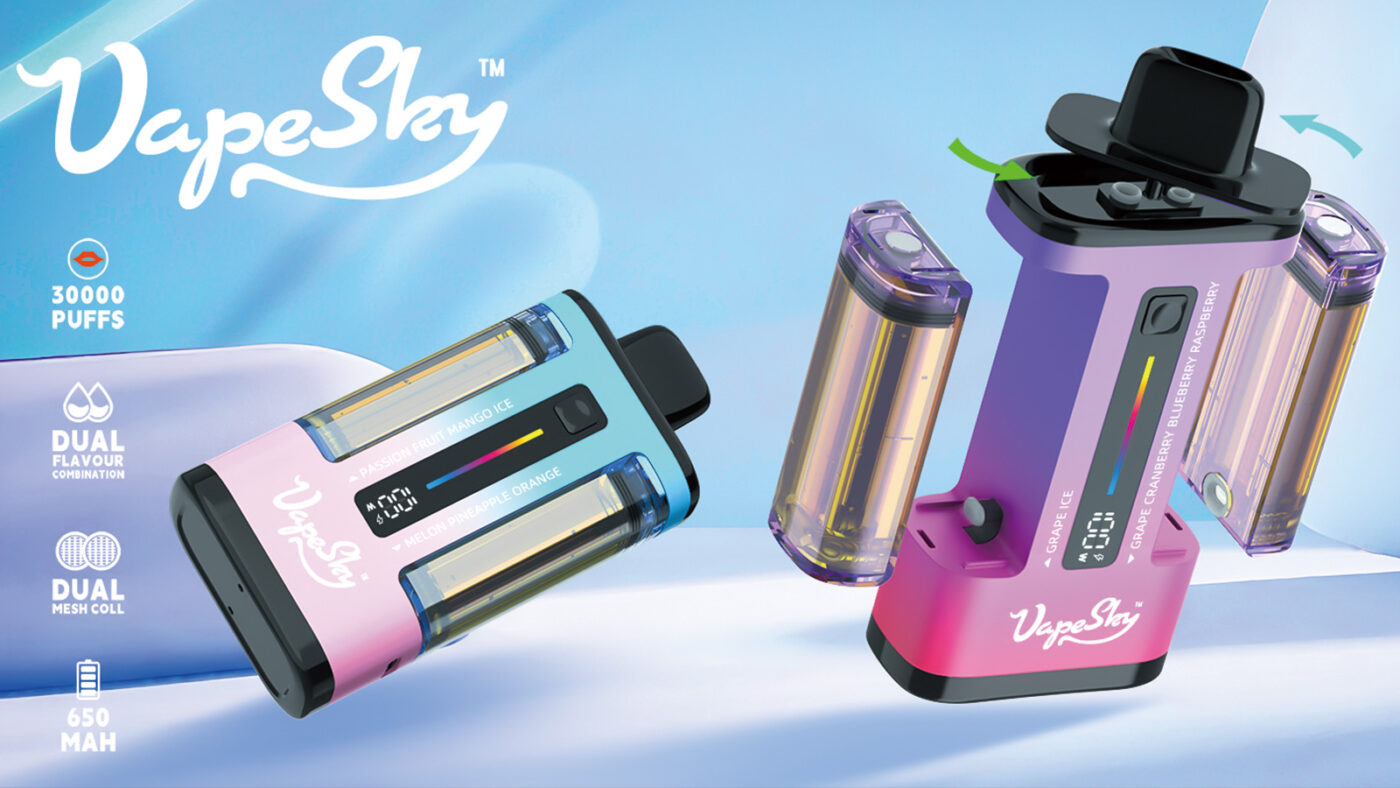
🔧 Traditional e-cig component manufacturing uses costly molds. Moreover, it faces long lead times and limited design flexibility. At VAPESKY, we’ve flipped this paradigm with 3D printing. Specifically, we turn bold design concepts into mass-produced, high-performance components quickly. What started as a R&D experiment is now a core production method. In fact, it redefines speed, customization, and cost-efficiency for e-cig parts. This includes atomizer housings and battery casings alike.
🔧 1. Why 3D Printing Replaces Traditional E-Cig Component Production
Conventional injection molding needs upfront mold costs. Specifically, each part costs $5,000–$20,000. Additionally, lead times stretch 4–6 weeks. Unfortunately, for small-batch or custom orders, this is financially unviable. Importantly, VAPESKY’s 3D printing eliminates these barriers. Our team produces prototype components in 24 hours. We then scale to mass production without mold tooling. This agility benefits brands needing fast iterations. It also supports regionalized component designs.
Unlike traditional methods, 3D printing enables complex geometries. For instance, think lattice-structured atomizer cores. These designs improve vapor flow and heating efficiency. We use food-grade resin and medical-grade stainless steel filaments. Consequently, all 3D-printed parts meet VAPESKY’s 3D printed component material standards. They also comply with global regulations like TPD3 and PMTA. Furthermore, this material choice ensures long-term product safety and user trust.
🔬 2. From Concept to Prototype: VAPESKY’s 3D Printing R&D
The journey from concept to scalable 3D printing starts in our R&D lab. Initially, our design team collaborates with brand partners. We then translate CAD models into printable components. Designers adjust wall thickness, material density, and functional features. These tweaks, in turn, optimize performance. To illustrate, we refined a 3D-printed pod cartridge design. As a result, it reduced leakage by 85% in three iterations.
🔬 We validate every prototype with rigorous testing. First, our team checks pressure resistance for e-liquid containment. We also test heat tolerance for heating element housings. Additionally, durability for daily use is assessed. VAPESKY’s 3D printing prototype lab streamlines this entire process. It houses 12 industrial-grade FDM and SLA printers. These run 24/7 to produce test parts efficiently and meet tight deadlines.
📈 3. Scaling 3D Printing for Mass E-Cig Component Production
Scaling 3D printing from prototypes to millions was once challenging. Previously, many manufacturers struggled with this bottleneck. To address this, VAPESKY solved it with a modular setup. Our facility operates 40 industrial 3D printers in parallel. AI-driven workflow software manages these machines. It optimizes print queues, material usage, and quality checks. As a result, we produce 50,000 3D-printed components daily. This effectively meets traditional manufacturing’s volume demands.
📈 Our scaling success relies on standardized post-processing. We automate deburring, curing, and sterilization steps. This ensures consistency for 3D-printed parts. It also aligns with VAPESKY’s mass production 3D printing solutions. We balance speed with strict e-cig safety controls. Notably, this approach maintains our low defect rate at scale. Furthermore, it supports cost stability even during high-volume production.
💰 4. Cost & Quality Wins with 3D Printed E-Cig Components
Beyond speed and flexibility, 3D printing delivers tangible cost benefits. 💰 Notably, our cost-saving approach cuts per-unit expenses for low-volume custom components. For example, savings reach 60% compared to molding. For mass production, material waste drops sharply too. In contrast to traditional methods (30% waste), it falls to just 5%. This not only reduces raw material expenses significantly but also aligns with our sustainability goals.
Quality control remains non-negotiable for VAPESKY. Our 3D-printed components have a 0.03% defect rate. In fact, this is lower than the industry average for molded parts. Thanks to real-time quality scanning during printing, we catch issues early. Specifically, AI cameras detect layer adhesion problems. They also spot material inconsistencies before parts are finished. Consequently, we ensure only high-quality components reach our partners.
🚀 Overall, VAPESKY’s 3D printing journey redefines e-cig manufacturing. We moved from concept to large-scale production successfully. By integrating 3D printing, our team eliminated mold costs and accelerated design cycles. We also maintained uncompromising quality standards throughout. By doing so, we made custom, high-performance components accessible. In turn, brands of all sizes can now benefit from this innovation. In the competitive e-cig space, 3D printing is the new standard. Indeed, VAPESKY is leading this industry transformation.